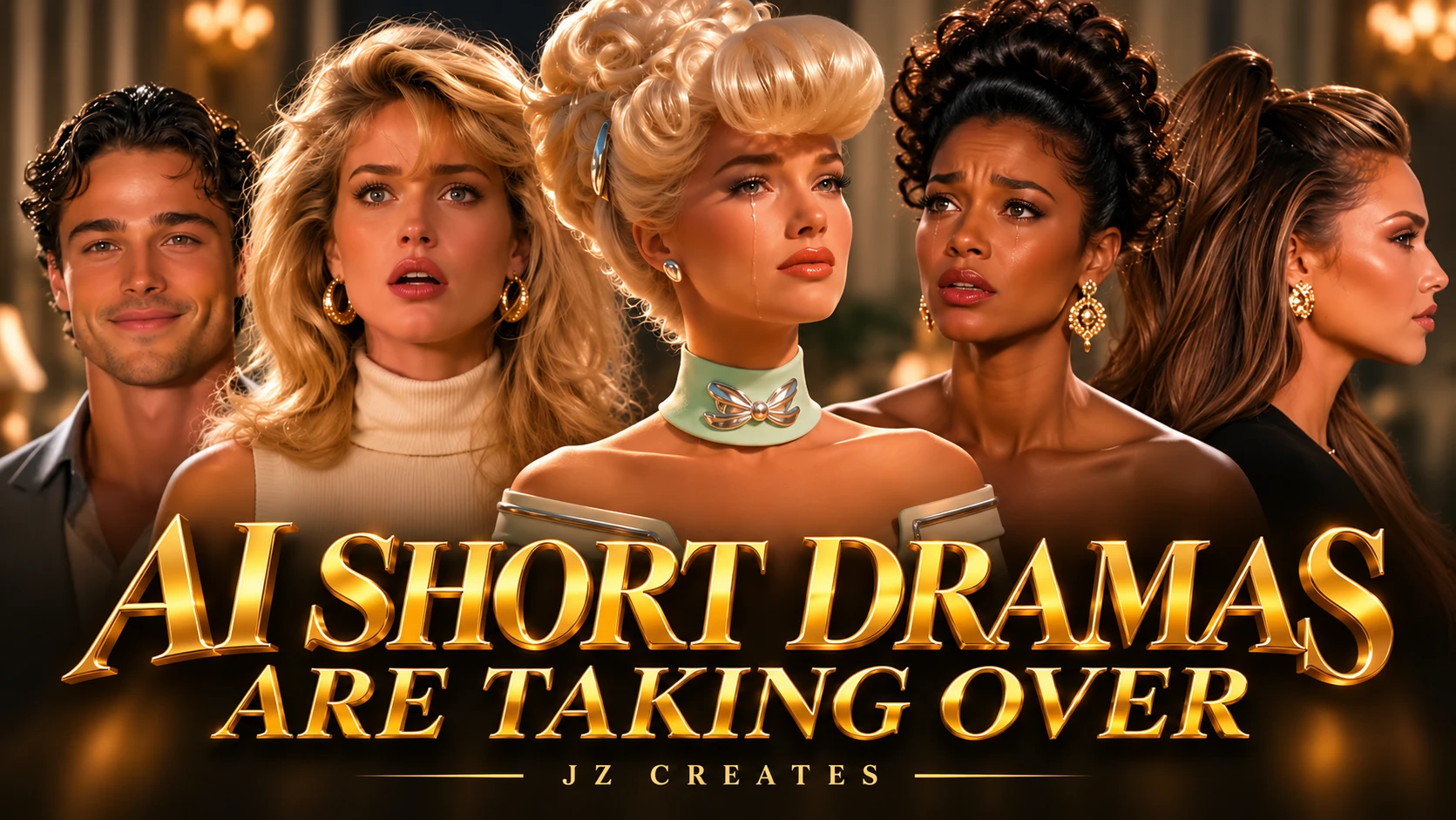
AI Short Dramas Are Taking Over, and We Can’t Stop Watching!
Sponsored
Sponsored
Key Takeaways
- AI short dramas are the fastest growing format in entertainment. Short drama apps hit more than 850 million downloads in the first quarter of 2026 alone, up about 140% from a year earlier.
- The money is real. ReelShort, the biggest app outside China, is on track for roughly $1 billion in revenue this year.
- AI changed how they get made in about 90 days. In China, more than 95% of new short dramas released in early 2026 were AI produced.
- Brands are building their own shows. Banana Republic, Marc Jacobs and Sol de Janeiro all launched vertical series in 2026 instead of another round of ads.
- 2027 is when it goes mainstream in the West. Hollywood studios, retailers and agencies are all lining up behind the format.
AI Short Dramas Are Taking Over Your Phone
If you have opened TikTok, YouTube Shorts or Instagram lately, you have probably been pulled into one. A billionaire in disguise. A secret heir. A slap, a twist, and a cliffhanger, all inside two minutes. These are AI short dramas, and they have quietly become one of the biggest stories in entertainment this year. People now spend about 25 minutes a day inside short drama apps, up 85% since January 2025, while time spent on traditional streaming apps has stayed flat, according to Sensor Tower data reported by TechNode.
We have been watching this space closely, because it sits right where our work lives: AI video, storytelling and brands. Here is what is happening, who is making money, why brands are suddenly paying for their own shows, and where we think AI short dramas are heading in 2027.
Here are three we can’t stop watching: a chance encounter on Lake Como with a secret attached, a heartbroken wife in a boutique full of very handsome gardening robots, and a Christmas breakup that ends with her walking into a blizzard in her pajamas.
View this post on Instagram
Post by VELIA LABS (@velialabs)
View this post on Instagram
Post by Ai Fascinated (@aifascinated)
View this post on Instagram
Post by Alex Nazarov (@alexnazarov.ai)
Swipe for more videos →
Sponsored
What Are Short Dramas?
Short dramas, also called micro dramas or vertical dramas, are scripted series shot for a phone screen. Each episode runs about one to three minutes, and a full series can run 50 to 100 episodes. The first few are free. After that, viewers pay per episode, subscribe, or watch ads to unlock the next one.
The stories are big on purpose. Revenge, secret identities, forbidden romance, rags to riches. Every episode has to deliver an emotional hit and end on a hook, because the next swipe is always one thumb away. If a traditional TV show is a slow burn, a short drama is a sugar rush.
The format started in China, then went global through apps like ReelShort and DramaBox. In our roundup of the best AI short films, we saw how far AI filmmaking has come. Short dramas take that same technology and point it at the most addictive format on your phone.
The Short Drama Numbers Are Hard to Ignore
This is no longer a niche. Here is where the industry stands heading into 2027:
| Metric | Number | Source |
|---|---|---|
| Global short drama market, 2026 | About $14 billion, heading to $26 billion by 2030 | Omdia, via Morphic |
| ReelShort revenue, 2026 | About $1.05 billion, up from $97 million in 2023 | Media Partners Asia, via Deadline |
| Short drama revenue outside China, 2026 | $3.6 billion, heading to $9.5 billion by 2031 | Media Partners Asia |
| App downloads, Q1 2026 | More than 850 million, up about 140% year over year | Sensor Tower |
| Daily time in short drama apps | About 25 minutes, up 85% since January 2025 | Sensor Tower, via TechNode |
| Hongguo (ByteDance) daily users, July 2026 | 168 million, more than Tencent Video, iQiyi, Youku and Mango TV combined | QuestMobile, via TechNode |
Swipe sideways to see the full table →
Media Partners Asia expects ReelShort to post its first profit this year, Deadline reported. DramaBox is right behind it, with both apps pulling close to $140 million in in-app purchases in the first quarter alone.
How AI Took Over Short Dramas in 90 Days
Here is the part that made us sit up. In February 2026, ByteDance released its Seedance 2.0 video model. Within about three months, AI had become the main way short dramas get made in China. Caixin reported that around 128,000 short dramas were released in the first quarter of 2026, nearly four times the total for all of the previous year, and more than 95% of them were AI produced.
The economics explain the speed. Studios that once spent weeks on a single series can now turn one around in days, which means they can test far more story ideas and double down on the ones audiences love:
| Live action short drama (2025) | AI short drama (2026) | |
|---|---|---|
| Typical budget | 300,000 to 400,000 yuan (about $42,000 to $56,000) | Under 100,000 yuan, some under 20,000 yuan |
| Team size | Around 40 people | Fewer than 10 people |
| Turnaround | About a week of prep plus 3 to 5 shooting days | A 100 minute series every 3 to 7 days for some studios |
Swipe sideways to see the full table →
The hits are enormous. One AI series, Entering the Song Dynasty with Weapons, has passed 12 billion views across 10 seasons and roughly 1,000 episodes, according to its production team. The Wire China reports that short dramas now use a large share of China’s AI computing power, with ByteDance dominating the market from the video model all the way to the app you watch on.
It is also getting more competitive. On November 6, China’s broadcast regulator launched a two month campaign against low quality AI dramas, and Hongguo says it has already acted on more than 20,000 titles over quality and originality, China Minutes reported. Volume alone is not enough anymore. The best stories win.
AI Drama Apps Are Going Global
China built the playbook, and the rest of the world is catching up fast.
- Dashverse, based in India, licenses AI series to TikTok and ReelShort. TheWrap reported its apps have more than 50 million downloads and over 4 billion episodes watched.
- Holywater, the company behind the My Drama app, also runs My Muse, a platform built for AI series. Fox Entertainment took a stake in Holywater and committed to more than 200 vertical series over two years, per The Hollywood Reporter.
- VibeShort serves AI stories in one to two minute episodes, sold by weekly or yearly subscription, TechBullion noted.
Meanwhile, independent creators are posting AI short dramas straight to Instagram, TikTok and YouTube, and the best ones look like they came from a studio. One Cupid story packs a whole blockbuster into fifteen seconds, while others lean into the classic cliffhanger format, with numbered parts that keep viewers coming back for the next drop. And some look like a lost scene from a 90s holiday movie:
View this post on Instagram
Post by TheEloraDiarys (@theeloradiarys)
View this post on Instagram
Post by Roman (@frameonix.ai)
View this post on Instagram
Post by After Midnight Stories (@after.midnight.stori3s)
Swipe for more videos →
Why AI Short Dramas Are So Addictive
Strip away the technology and the format runs on a few very old storytelling rules:
- Start with the loudest moment. The first three seconds show the slap, the fall or the reveal, so you have to stay to learn how it got there.
- A familiar story, told fast. Cinderella, love against the odds, two rivals who want the same thing. You get it in seconds.
- An emotional swing every 20 to 30 seconds. Hope, humiliation, triumph, betrayal, then hope again.
- End right before the answer. Every episode stops just before the decision, the kiss or the big reveal.
It is the same reason AI influencers took over social media this fall: a character you recognize instantly, a reason to come back tomorrow, and a constant stream of new episodes.
You can see every one of those rules at work in these clips. A familiar setup, a big reaction, and a payoff in seconds:
View this post on Instagram
Post by Maren (@maren.frames)
View this post on Instagram
Post by Anna Baum (@ai.na.baum)
View this post on Instagram
Post by Anna Baum (@ai.na.baum)
Swipe for more videos →
Sponsored
Brands Are Building Studios, Not Buying Ads
This is the shift we think matters most for marketers. Brands have figured out that people skip ads but binge stories, so a growing list of them are making their own short series instead.
- Banana Republic launched The Agency on October 14, a five part vertical comedy starring Jack Innanen, with every character dressed from the brand’s archive, reported by The A.V. Club.
- Marc Jacobs released The Scene, a short series written by and starring Rachel Sennott that turns the brand’s bag into the plot, per Marketing Dive.
- Sol de Janeiro partnered with Channel 4 on The Guest List, a five part micro drama where each character is inspired by a different scent. It was Channel 4’s first vertical drama commission.
- JD.com, one of China’s largest retailers, is testing free short dramas where viewers can buy the products they see on screen, TechNode reported.
It is not only global fashion houses. Nykaa Wanderlust, an Indian bath and body brand, is running its own microdrama with recurring characters and new episodes, and the product sits right in the story. Even a blanket can carry one: the Lola ad in the middle below opens on an awkward first meeting with the parents, lands a twist, and turns the product into the punchline. It pulled more than 24 million views. And Hollywood writer Chad Sanders thinks every brand will end up with a series like these.
View this post on Instagram
Post by Nykaa Wanderlust (@nykaawanderlust)
View this post on Instagram
Post by TheBranding (@thebranding.ai)
View this post on Instagram
Post by Chad Sanders (@chadsand)
Swipe for more videos →
And the budgets are real. Brands are now funding creator led series for anywhere from $150,000 to $5 million, according to Digiday, with a typical ten episode series landing around $300,000 to $500,000. A comparable unscripted TV series can cost about $5 million in physical production alone. Variety called microseries one of the hottest pitches to brands this year.
As Justin Lee Stanley points out in the first clip below, this is a full circle moment. In the 1950s, brands owned shows outright. Now Gap has a chief entertainment officer, Toyota has its own talk show, and Prada hired Barry Jenkins to direct a short film. James Crane takes it a step further: brands are becoming the new financiers of entertainment.
View this post on Instagram
Post by Justin Lee Stanley (@akajudsonlee)
View this post on Instagram
Post by James Crane (@jamespcrane)
Swipe for more videos →
Sponsored
Short Dramas Are Hollywood’s New Pilot Season
Hollywood is paying attention too. In October, Fox Entertainment signed a first look deal with Kevin Hart’s Hartbeat, covering film and TV projects developed from its vertical series under the Codeblack, Essence and Revolt brands, TheWrap reported. The first slate is 25 vertical series on the My Drama app.
Think about what that means. Instead of a pilot shown to a room of executives, a story gets tested in public, at a fraction of the cost. The series that audiences love get the bigger budget. It is the most data driven pilot season Hollywood has ever had.
Where AI Short Dramas Go in 2027
Based on everything we are seeing, here is what we expect next year:
- AI becomes the default outside China too. The cost and speed gap is too big to ignore, and Western apps like Dashverse and My Muse are already built around it.
- Quality beats quantity. China is already cracking down on low effort AI dramas. The winners in 2027 will be the series that look cinematic and tell a real story.
- Shoppable episodes arrive. JD.com is testing it now. Expect retailers and social platforms to let you buy the jacket the hero is wearing without leaving the episode.
- Every major brand tests a series. Banana Republic and Marc Jacobs went first. In 2027, a vertical series becomes a standard line in the marketing plan.
- The best short dramas become movies and TV shows. Deals like Fox and Hartbeat turn vertical hits into a farm system for Hollywood.
Our take: AI short dramas give mid size brands something they never had before, the ability to test a story driven series for a fraction of a traditional TV budget, then scale the episodes people actually watch. The brands that start learning the format now will have a big head start in 2027.
And the creators are only getting bolder. One made an over the top AI soap opera on purpose, with divorce papers and a revenge plan in episode one. Another stages a rainy night street scene that plays like a classic movie. And one fantasy series about a castaway and a mermaid has pulled close to 5 million plays on a single episode:
View this post on Instagram
Post by Dana Kasher (@reelyou_ai)
View this post on Instagram
Post by Tetiana Kotvytska (@tetiana.noir)
View this post on Instagram
Post by Worlds in 20 Studio (@worldsin20.studio)
Swipe for more videos →
What We Actually Use at JZ Creates
We run JZ Creates, a creative agency in LA focused on AI and automation for brands, and story driven video is something we are building for clients right now. For character sheets and video generation we use Kie.ai, a pay as you go hub for the latest image and video models, including Seedance 2.5. Character voices come from ElevenLabs, the edit and captions happen in CapCut, and episodes go out on a schedule through Blotato so one plan feeds TikTok, Instagram, YouTube Shorts and more.
The Bottom Line
AI short dramas are not a fad. They are a new format with real audiences, real revenue and a fast growing list of brands behind them, and 2027 is shaping up to be the year they go mainstream. If you are wondering whether a short drama series could work for your brand, that is exactly the kind of project our team loves. At JZ Creates, we produce captivating, engaging content for brands across social and digital, from cinematic AI video to full AI creative services. Browse more breakdowns on our blog, or contact us today and let’s tell a story people can’t stop watching.
Frequently Asked Questions About AI Short Dramas
What are AI short dramas?
AI short dramas are scripted vertical series, usually one to three minutes per episode, where the characters, scenes and footage are created with AI image and video models instead of a live action shoot. They follow the classic short drama formula of big emotions and a cliffhanger every episode, and they are watched on apps like ReelShort and DramaBox as well as TikTok, YouTube Shorts and Instagram.
How much money do short dramas make?
A lot. The global short drama market is estimated at about $14 billion in 2026. ReelShort alone is on track for roughly $1.05 billion in revenue this year, and short drama apps earned around $750 million from in-app purchases in the first quarter of 2026.
Are most short dramas made with AI now?
In China, yes. More than 95% of the roughly 128,000 short dramas released in the first quarter of 2026 were AI produced, according to Caixin. Outside China, live action still leads on the biggest apps, but AI focused platforms like Dashverse and My Muse are growing fast.
Why are brands making their own short dramas?
Because audiences skip ads but binge stories. A short series lets a brand hold attention for minutes instead of seconds and work the product into the plot. Banana Republic, Marc Jacobs and Sol de Janeiro all launched vertical series in 2026, and brand funded creator series now range from about $150,000 to $5 million.
What is next for AI short dramas in 2027?
Expect AI production to spread beyond China, a bigger focus on quality over volume, shoppable episodes where you can buy what you see, more brands commissioning their own series, and more vertical hits being developed into films and TV shows through deals like Fox and Hartbeat.

About Jay Hernandez
Jay Hernandez is an award-winning Creative Director with 20+ years of driving standout campaigns for top brands. Based in Los Angeles, he blends deep creative expertise with cutting-edge AI tools to help businesses and marketing teams unlock bold, breakthrough ideas that deliver real impact. If you are ready to elevate your brand and turn big visions into unforgettable campaigns, connect with Jay and make it happen.
Share This Article
Sponsored