AI Influencers Are Taking Over Social Media: We Broke Down the Strategy and the Money Behind the Viral Characters!
Sponsored
Sponsored
Key Takeaways
- AI influencers are pulling real numbers. Jean Phil reportedly reached 117 million views and more than 400,000 followers in under two weeks, and one seven post TikTok character passed 49.6 million views.
- The bar dance 1.8 million people watched on X was AI. Benjamin Stachio does not exist. His Instagram started posting on September 27 and passed 90,000 followers within a week.
- The playbook is public and simple. One unforgettable character, a look that never changes, real human motion borrowed from a reference clip, and a new location every post.
- The money is not in the views. It sits behind them: brand integrations, AI UGC ads sold to brands, affiliate links, and on the dark side, meme coins that crash.
- The free ride is ending. Instagram now asks AI accounts to wear an “AI-generated profile” label and pulls unlabeled ones out of recommendations.
The Dancing Man 1.8 Million People Watched Was Never Real
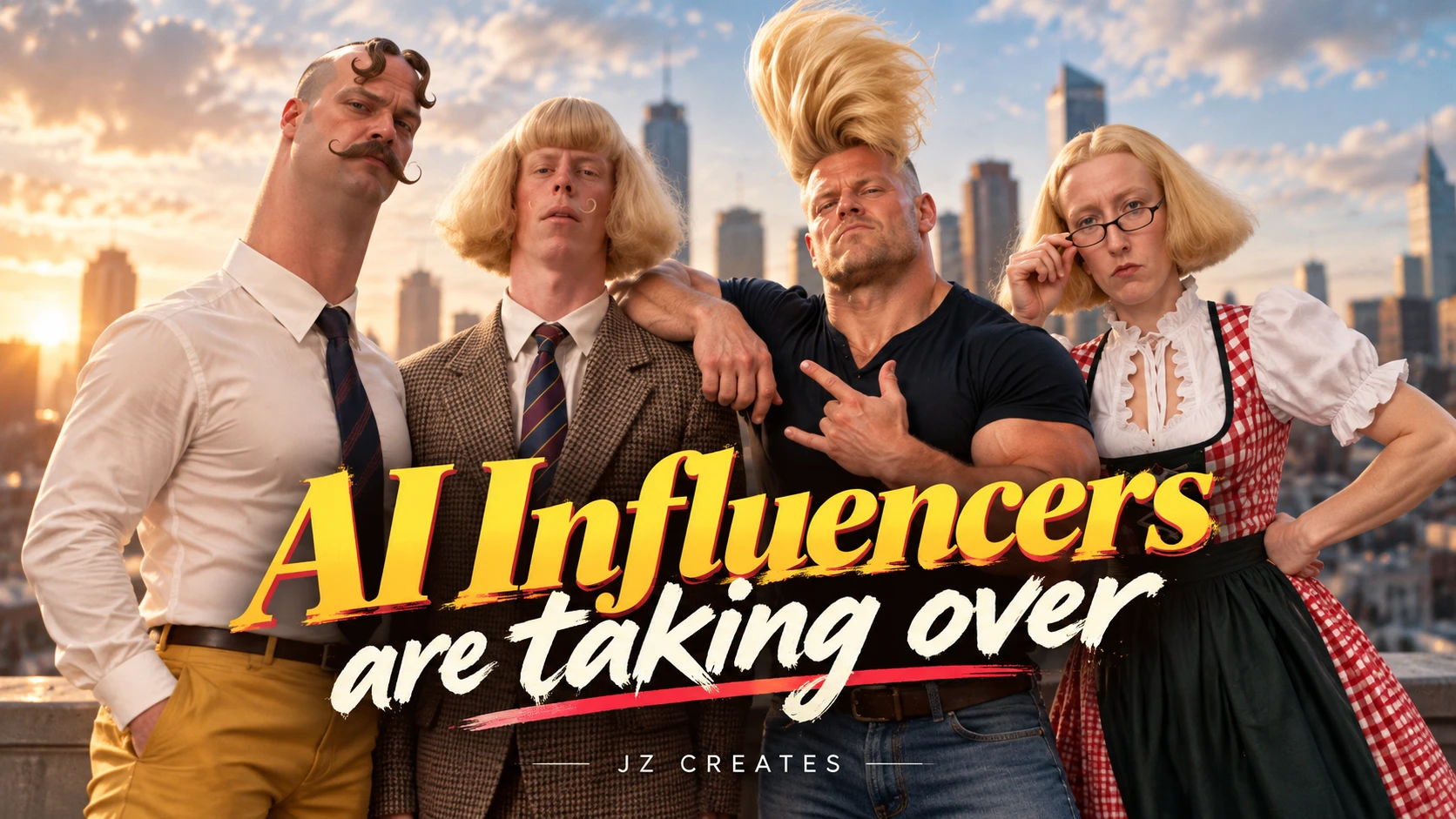
Last week a clip of a man dancing in a crowded bar crossed 1.8 million views on X. Giant neck, tiny head, a triple mustache, yellow trousers, singing along to a song nobody could quite make out. Most of the replies treated him like a real guy having the best night of his life. He is not a guy at all. He is one of a new wave of AI influencers taking over social media, and he was built for exactly one thing: your attention.
Post by Teddybearisms (@teddybearisms)
His name is Benjamin Stachio, at least on Instagram, where the account’s first visible posts date to September 27. Dexerto counted 62,500 followers three days later, and by October 2 LADbible put it past 90,000. The bar dance alone pulled more than 640,000 likes and 59,000 comments on Instagram. Nobody has claimed him. No creator, no agency, no studio.
What we found behind him is bigger than one strange dancing man: a repeatable formula, a toolkit that makes these accounts almost free to produce, and several business models stacked on top. Here is the strategy, the numbers, and what it means if you market a brand.
Meet the AI Influencers Taking Over Your Feed
Benjamin did not come out of nowhere. He is part of a September 2026 wave of AI characters with exaggerated, instantly readable looks, and almost none of them have a known creator behind them.
| Character | The look | First seen | Reported reach |
|---|---|---|---|
| Jean Philanthrope (Jean Phil) | Brown suit, blonde bob, curled mustache, silently shadowboxing in odd places | Sept 17, 2026 | 117M views from 15 posts, 400K+ followers across TikTok and Instagram |
| Benjamin Stachio | Enormous neck, tiny head, triple mustache, dancing in bars | Sept 27, 2026 | 90K+ Instagram followers, 1.8M views on a single X repost |
| Archibald Brown | Pitched as Jean Phil’s English rival | Late Sept 2026 | 110K+ followers |
| Derek Mercer | Long hair, heavily muscled | Late Sept 2026 | About 1,200 followers |
Swipe sideways to see the full table →
That last row matters. Not every clone lands. Jean Phil is the template everyone is copying, and according to Dexerto the account went from its first post to 228,000 followers in about eight days. Dre Voudouris broke down why it worked better than we could:
Post by Dre Voudouris (@drevoudouriss)
That is the entire strategy in five lines, and none of it is an AI insight. It is classic character design, executed at the speed of a meme.
César Álvarez flagged the part that should make every marketer sit up: nearly 500,000 followers on an account less than two weeks old.
Post by César Álvarez (@cesaralvarezll)
Sponsored
The copycats arrived within days. A gym bro with a two foot blonde quiff reportedly hit 26,000 followers and 2.2 million likes in 48 hours, with one clip claimed at $13,700. We cannot verify the payout, but the follower curve is public.
Post by kelm (@kelmruns)
Why It Is So Hard to Tell Real Videos From AI Now
Two years ago, spotting AI video was easy: melting hands, dead eyes, broken physics. That is not the tell anymore, because these accounts do not generate a person from scratch. They borrow a real one.
A creator films themselves or grabs a clip that is already viral, then uses a video model like Seedance 2.5 to swap a designed character into the performance, keeping the camera move, the lighting, and the crowd. The body language feels real because a real body did it. Only the face and costume are invented.
Post by Kirill Morozov (@KirillMorozovop)
The swap instruction is short. Here is the general shape, in our own words:
Character swap prompt: “Replace the person in this clip with the character in my reference images. Keep their exact movement, facial expressions, framing, and camera motion, and leave the background and the other people untouched.”
Dance used to be the giveaway because AI could not hold a body together through fast movement. With a human performance underneath, it holds.
Post by Zyro AI (@Itswsm105f)
Sponsored
How to Tell If an Influencer Is AI
No single sign is proof, but three or four together usually are:
- Proportions that cannot exist. Benjamin’s neck is wider than any human frame allows. Trust your gut when a body looks drawn.
- A face that drifts. Chins, mustaches, and hairlines quietly shift between shots.
- Audio that sounds like language but is not. Benjamin’s song never forms real words, and neither does the crowd.
- A brand new account that is already huge. First post a week ago, six figure following, zero accounts followed.
- The character never talks to camera. Natural talking is still the hardest thing to fake, so most of these accounts skip it.
- A token in the bio. If the link goes to a meme coin, you are looking at a funnel, not an influencer.
The AI Influencer Playbook: How These Accounts Are Built
What surprised us most: the strategy is completely public. Creators on X are posting step by step breakdowns, usually with a jab at the people selling $299 courses on the same thing.
Post by Laur (@laurgrowth)
Pull together what rewind, Beliy, Chris, and the others are sharing and it comes down to six moves:
- Design one absurd detail. A giant square bob, a curled mustache, an impossible neck. It has to read in half a second at thumbnail size.
- Dress it loud and keep a straight face. Formal clothes, one clashing color, a completely serious expression. The joke is that the character thinks this is normal.
- Lock the look with a character sheet. Creators use ChatGPT and GPT Image 2.5 to generate full body angles and close ups of the same face and outfit.
- Borrow the motion. Film a 15 second reference of yourself or pick a clip already performing in your niche.
- Swap and animate. Place the character into the first frame, check the face and hands, then animate it in Seedance 2.5 using the clip as the motion reference.
- Change one variable and post every day. Same character, same deadpan, new location every time.
rewind’s version is the cleanest we found, and it comes with receipts.
Post by rewind (@rewind02)
Beliy runs the same loop from the other direction: grab a viral TikTok and swap the original creator out. One account doing that reportedly hit 16 million views in three days.
Post by Beliy (@Beliy_95)
Sponsored
Even the research is getting automated. Chris shared a prompt that has an AI agent find trending clips in a niche, score which ones a character could step into, and design the character.
Post by Chris (@everestchris6)
And because the location is the only variable, the locations keep escalating. Pounds captured the energy of the whole trend in one post.
Post by Pounds (@pounddz)
The tool companies noticed. On October 2, a major AI video platform launched a dedicated AI influencer feature built on this exact swap workflow, and the announcement passed 3.2 million views on X. Talking head AI creators are their own lane, and tools like invideo AI handle the template, the cloned voice, and 50+ languages.
The Numbers Behind AI Influencers
These figures come from the people who posted them, so treat them as reported, not audited. The pattern is still hard to ignore.
| Account | Posts | Views | Followers | Timeframe |
|---|---|---|---|---|
| Jean Phil (TikTok and Instagram) | 15 | 117M | 400K+ | Under 2 weeks |
| Unnamed TikTok character | 7 | 49.6M | 219K | Every post above 2M views |
| Unnamed Instagram character | 10 | 63.3M | 92.6K | Not disclosed |
| Benjamin Stachio (Instagram) | Not disclosed | Millions | 90K+ | About 6 days |
| Quiffed gym bro | Not disclosed | 2.2M likes | 26K | 48 hours |
| Unnamed swap account | Not disclosed | 16M | Not disclosed | 3 days |
Swipe sideways to see the full table →
arc.’s breakdown of the seven post TikTok account is the best data point we found: about 7 million views per video, a 7.7% like rate, no faces, no talking. It is in Spanish and worth the translate button.
Post by arc. (@arceyul)
Sponsored
Compare that with the old guard. Lil Miquela spent years building to roughly 2.4 million Instagram followers, and Brazil’s Lu do Magalu sits around 7.8 million with a major retailer behind her. Jean Phil reached 400,000 in two weeks with nobody publicly attached.
The old virtual influencers were built like celebrities. The new ones are built like memes. The category is real money either way: the AI influencer market was valued at $6.06 billion in 2024 and is projected to grow at roughly 40% a year, according to Grand View Research figures cited in invideo’s breakdown of AI influencers on Instagram.
Beyond the Memes: AI Influencers That Tell a Story
The weird men get the headlines, but brands should watch a quieter lane: consistent characters that follow a storyline. Creators pairing APOB with Seedance 2.5 are making 30 second vlogs where the same character moves in one day and explores the city the next.
Post by Ai Girllie (@Inshrah_ali_)
Ai Girllie names the shift well: not another cool clip, but characters people recognize and stories they can follow. That is the part that maps straight onto brand storytelling.
Post by Ai Girllie (@Inshrah_ali_)
That consistency now holds through choreography too.
Post by Ai Girllie (@Inshrah_ali_)
Sponsored
Steady identity across a full 30 seconds is what makes the vlog format believable.
Post by Zyro AI (@Itswsm105f)
Subhan Qureshi calls it the move from prompt roulette to real storytelling. One note: several posts in this section share the tool’s own showcase clips, so read them as demos, not independent tests.
Post by Subhan Qureshi (@LearnWithSubhan)
How AI Influencers Actually Make Money
Views alone pay very little. The character is the traffic, and the money sits behind it. Here are the models, from most legitimate to most questionable.
Brand Deals and AI UGC Ads
The cleanest business is selling content to brands. César’s version: recreate proven UGC ad formats with your character and pitch brands $1,500 to $10,000 a month for a steady stream of creatives. arc. suggests product placement inside the character’s scenes, or selling brands a character of their own.
Post by César Álvarez (@cesaralvarezll)
Sponsored
Then there is AI UGC with no backstory at all. Charly Adams shared a protein ad where the woman, the voice, and the demo are all generated. The pitch is speed: test ten angles before a shoot is even booked.
Post by Charly Adams (@SparkifyAI)
George Stock claims his AI UGC costs under a dollar a video and runs across thousands of accounts. The cost math is real. The catch: a fake person giving a testimonial is exactly what disclosure rules exist for, and thousands of accounts collides with every platform’s spam policy.
Post by George Stock (@georgesttock)
Payout Campaigns, Courses, and Hype
The loudest numbers often come with a pitch attached. Mau Baron’s claim that a creator made $180,000 in a week pulled 1.6 million views. We cannot verify it, and posts like this usually lead to a payout campaign or a paid program. In a gold rush, the people getting paid most reliably are the ones selling shovels.
Post by Mau Baron (@maubaron)
Meme Coins: The Dark Side
Jean Phil’s Instagram bio links to a JEANPHIL token. Dexerto reported its market cap near $8.8 million on September 25, and LADbible later reported it had lost about 99% of its value. Benjamin’s bio currently reads “no crypto affiliation yet,” and that last word is doing a lot of work.
When a character exists to pump a token, the audience is not the customer. The audience is the exit. Stay well clear.
Are AI Influencers Legal? The Rules Are Catching Up
Making an AI character is legal. Passing it off as a real person, or selling with it undisclosed, is where trouble starts.
- Instagram: on August 31, Instagram tightened its rules for AI accounts. AI personas are asked to carry an “AI-generated profile” label, Meta will flag suspected AI accounts posing as humans, and unlabeled ones get pulled from recommendations. For a business built on reach, that is the whole business.
- TikTok: creators are expected to label AI-generated content showing realistic people or scenes, and unlabeled synthetic media can be removed.
- The FTC: the Endorsement Guides explicitly cover virtual influencers since their 2023 update. Paid promotions must be disclosed, and a character cannot claim experiences with a product it never had.
There is a quieter issue too. Swapping your character into someone else’s viral video builds on a performance you do not own, a copyright and likeness problem waiting for its first big test case.
What AI Influencers Mean for Brands
Our take: the AI is the easy part. As arc. put it, the character design earned 49.6 million views, not the model. On social you get about two seconds before the thumb moves, and every account here wins them the same way: one silhouette you read instantly, a straight face, and a format your brain already knows. It is the same principle behind AI Instagram content that stops the scroll.
Brand mascots are not new. The cost and speed are. A consumer product on a tight budget can test a character in a week for less than one shoot day. A music festival can give its lineup drops a recurring host. A book author can give a narrator a face readers follow between releases.
But we steer every client away from photoreal fake people passed off as humans. Benjamin fooled a lot of viewers, and the comments turned the moment they found out. Trust is the most expensive thing a brand owns. Here is how we would do it:
- Make it obviously a character, or label it clearly from day one. Stylized beats deceptive.
- Own the performance. Film your own reference footage instead of lifting someone else’s viral clip.
- Build a world, not a stunt. A consistent look, one variable per post, and a storyline people can follow.
- Measure past the views. Saves, comments, profile visits, and clicks tell you whether anyone actually cares.
- Never touch a token. Not even as a joke.
The novelty window on strange AI men dancing in bars is closing fast. What lasts is what always lasted: an idea worth following.
What We Actually Use at JZ Creates
We run JZ Creates, a creative agency in LA focused on AI and automation for brands, and character driven content is something we are actively building for clients. When we develop a character, we generate the character sheets and motion tests with Kie.ai, a pay as you go hub for the latest image and video models. When a character needs a voice, it comes from ElevenLabs. Captions and fast social cuts happen in CapCut, and the daily posting cadence these accounts depend on runs through Blotato so one schedule feeds TikTok, Instagram, and X at once.
The scheduling side is where our AI automation services come in, and we walk through that setup in our guide to AI social media automation. If TikTok is your main channel, our breakdown of AI TikTok video is a good next read.
The Bottom Line
If you have been watching AI influencers take over your feed and wondering whether a character could work for your brand, that is exactly the kind of project our team loves. At JZ Creates, we produce captivating, engaging content for brands across social and digital, from cinematic AI video and 3D to full AI creative services with the automation behind them. Browse more breakdowns on our blog, or contact us today and let’s build a character people actually want to follow.
Frequently Asked Questions
What are AI influencers?
AI influencers are social media personas that are fully generated with AI rather than played by a real person. Some, like Lil Miquela, are run by agencies and brands as long term virtual celebrities. The newest wave, like Jean Phil and Benjamin Stachio, are viral characters built with image and video models, often by swapping a designed character into real human footage, and posted daily on TikTok and Instagram.
How can you tell if an influencer is AI?
Look for several signs together: body proportions that are physically impossible, a face or mustache that shifts between shots, audio with lyrics or chatter that never forms real words, an account that is days old but already has a huge following, a character that never speaks to camera, and a crypto token linked in the bio. Instagram also now asks AI accounts to show an AI-generated profile label.
Do AI influencers actually make money?
Some do, but rarely from views alone. The common models are brand integrations and sponsored posts, selling AI UGC ads to brands for roughly $1,500 to $10,000 a month, affiliate links, and platform payout programs. Established virtual influencers like Aitana López have reportedly earned up to €10,000 a month. The riskiest model is meme coins, which have crashed hard.
Is it legal to create an AI influencer?
Yes, creating an AI character is legal. The rules apply to how you use it. The FTC’s Endorsement Guides cover virtual influencers, so paid promotions must be disclosed. Instagram and TikTok expect realistic AI content and AI personas to be labeled, and Instagram limits the reach of unlabeled AI accounts. Using someone else’s video as the base for a character swap can also raise copyright and likeness issues.
How do people make an AI influencer go viral?
The viral AI influencers follow the same formula: one absurd, instantly recognizable visual detail, a consistent look locked in with a character sheet, real human motion borrowed from a reference clip and animated with a video model such as Seedance 2.5, a deadpan expression, and a new location every post while everything else stays the same. Posting daily keeps the algorithm treating it like any other creator.

About Jay Hernandez
Jay Hernandez is an award-winning Creative Director with 20+ years of driving standout campaigns for top brands. Based in Los Angeles, he blends deep creative expertise with cutting-edge AI tools to help businesses and marketing teams unlock bold, breakthrough ideas that deliver real impact. If you are ready to elevate your brand and turn big visions into unforgettable campaigns, connect with Jay and make it happen.
Share This Article
Sponsored