AI Employees Never Sleep: AI Agents for Business in 2026
Sponsored
Sponsored
It’s 6:14 on a Monday morning. A luxury watch brand we work with hasn’t opened a laptop yet, but the brand has already had a busy night.
While the founder slept, one AI agent published a 1,400-word blog post answering the exact question her buyers were Googling at midnight. Another scheduled a week of platform-native social posts, each written for its own feed instead of copy-pasted across all of them. A third sent the Tuesday newsletter to 9,000 subscribers. A fourth scouted three new AI tools that dropped over the weekend and flagged the one worth testing. A fifth read every email that came in over the weekend and left a tidy Monday check-in waiting: the week’s to-do list, three draft replies ready to send, and two meetings already on the calendar. And a sixth quietly stitched all of it together so nobody had to touch a single dashboard.
That is what AI agents for business look like in 2026. Not a chatbot. Not one clever prompt. A small team of specialized AI employees, each trained on one brand, each doing one job well, all running while everyone else is asleep. Let us show you exactly how this works, and why the brands building this right now are about to pull away from the ones that are not.
Key Takeaways
- An AI employee is a purpose-built AI agent trained on your brand’s data and pointed at one job: writing, social, SEO, research, or reporting.
- The winning brands are not using AI to work a little faster. They are using it to offer things they could never afford before.
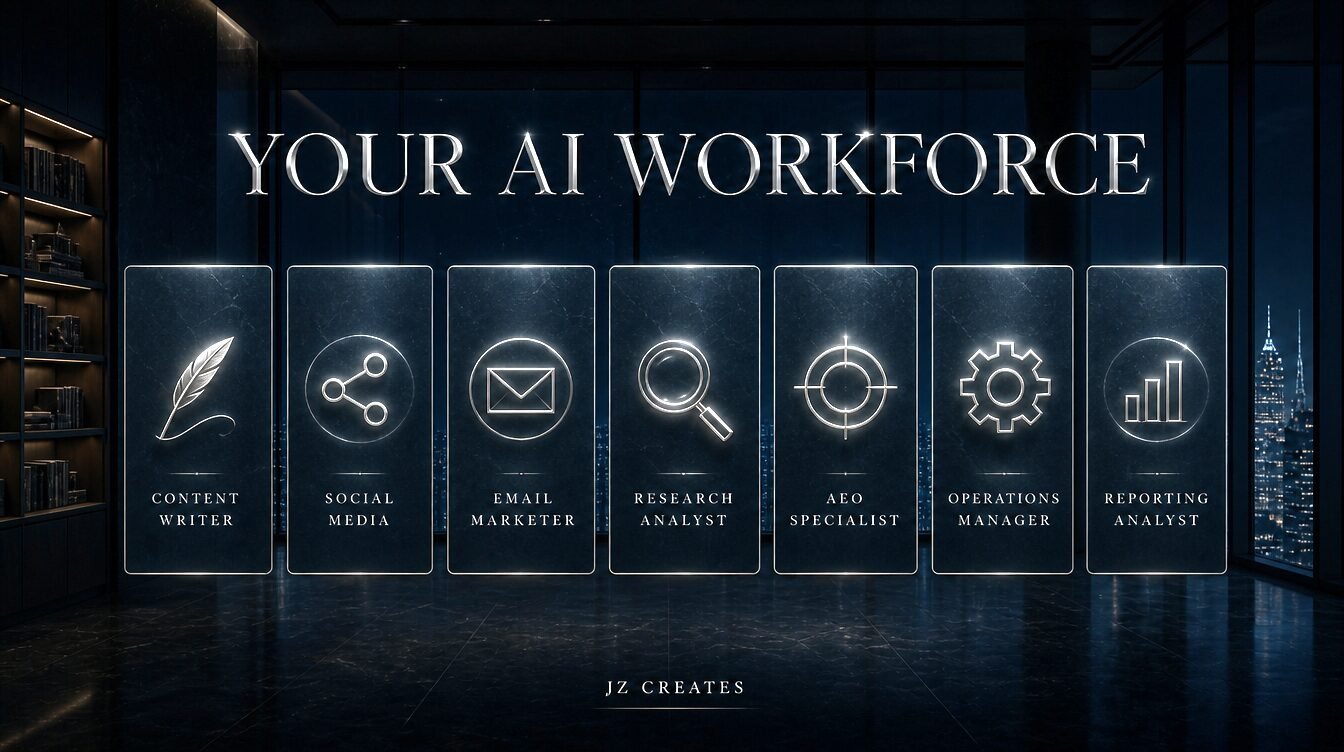
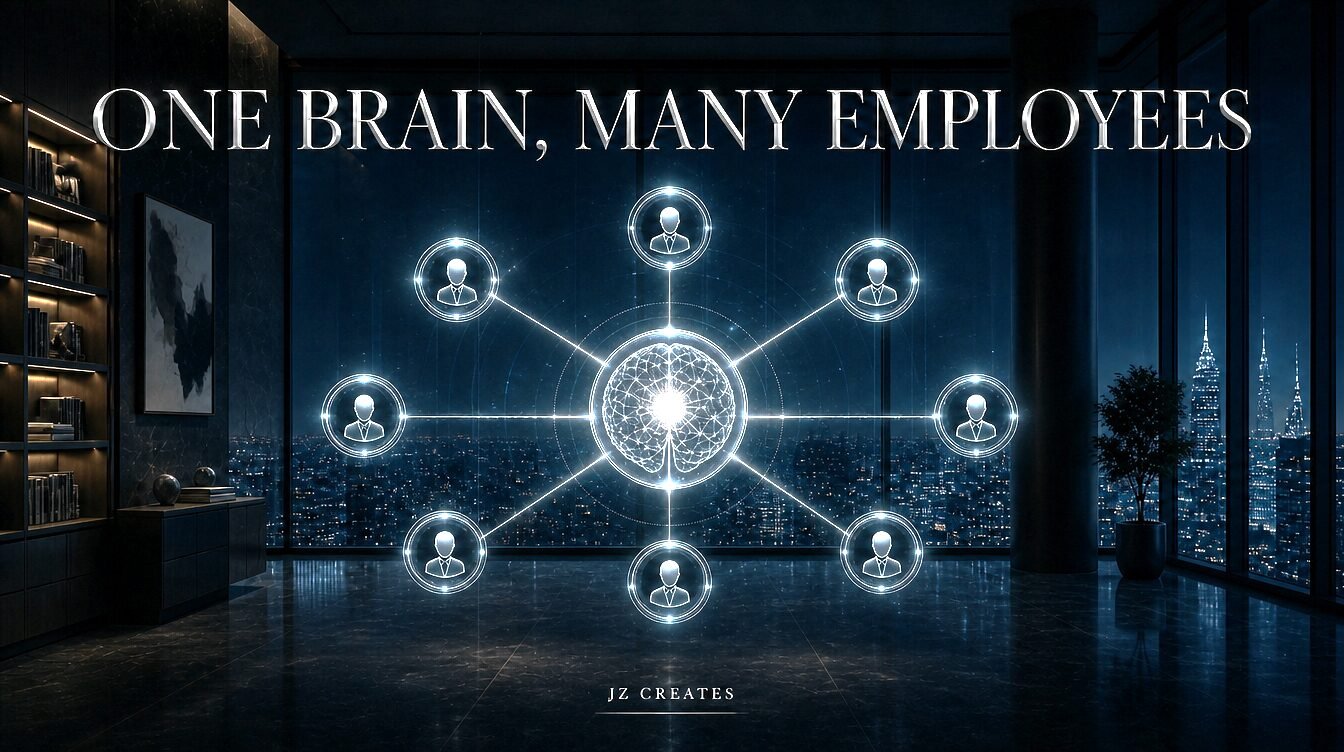
- A full roster of seven AI agents for business can run content, social, newsletters, research, search, reporting, and daily operations on one shared brain.
- The thing that makes or breaks all of it is not the tools. It is how well your brand’s information is organized so the AI can actually use it.
- AI used like a cheap intern makes you invisible. AI used like an engine makes you tough to catch.
- The possibilities are so wide open that a single founder plus a roster of agents can now run what used to take a full team, which is exactly why so many 2026 businesses are launching as solo ventures.
What an AI Employee Actually Is (And Why 2026 Is the Tipping Point)
The phrase “AI employee” gets thrown around loosely, so let us be precise.
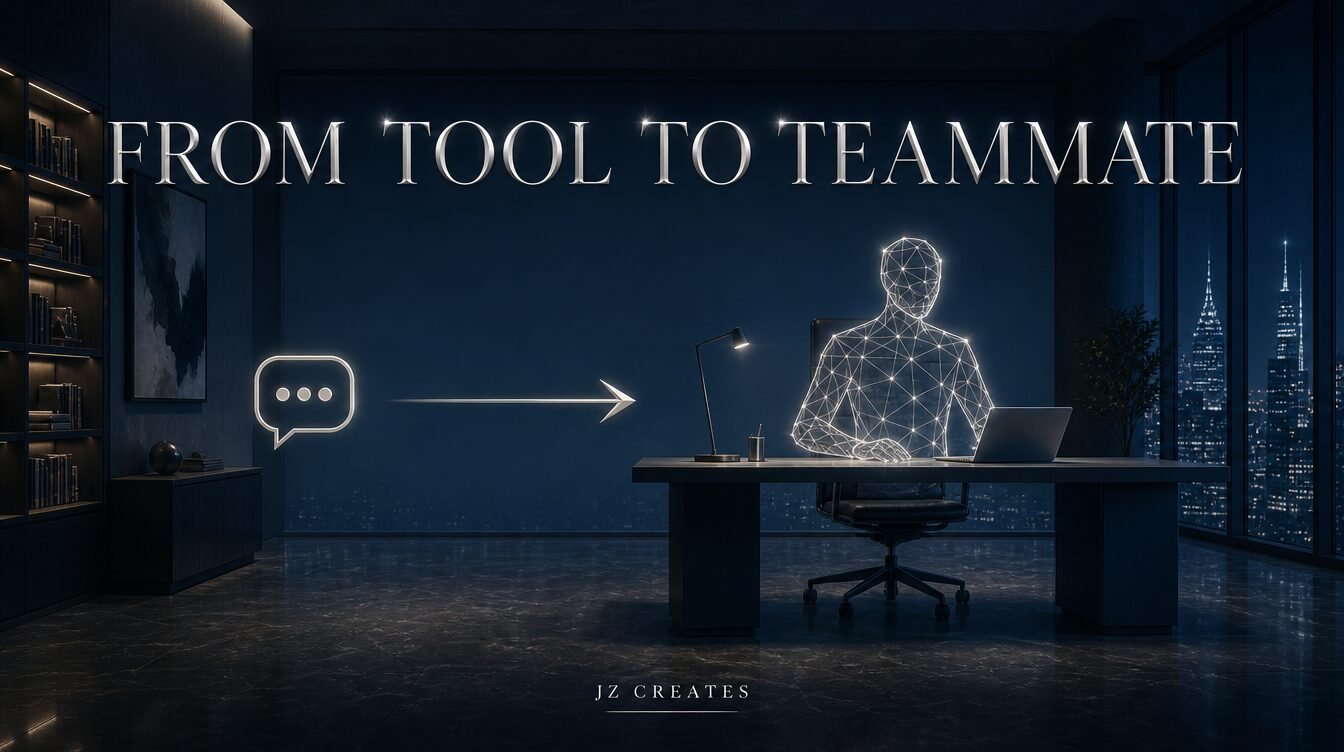
An AI employee is not ChatGPT in a tab. It is an AI agent with a defined role, trained on your brand’s voice and data, that plans a task, does it, checks its own work against your standards, and reports back. The industry calls these agentic systems, and 2026 is the year they crossed from demo to daily driver. Microsoft’s 2026 Work Trend Index describes the shift from AI-as-tool to AI-as-coworker, and PwC’s 2026 AI predictions report most companies using AI agents are seeing measurable productivity gains.
Here is our honest take after building these for brands. AI is a tool, not a talent. A roster of agents will not save a brand with nothing to say. But give it a clear voice and a real point of view, and it carries that voice further than any small team could. The distance between using AI and using AI well is enormous, and most brands are still parked at stage one.
The Roster: 7 AI Agents for Business That Run the Brand 24/7
Here is the team we actually deploy for a brand, and the job each one owns.
1. The AI Content Writer (The Workhorse of the AI Agents for Business Roster)
This agent pulls your brand voice, your top-performing posts, and your target keywords, then produces long-form blogs and email copy that sound like you and rank on Google. It writes on brand every time because it reads the same brief your best writer would, and we run drafts through Claude because the quality holds up at volume. The content engine that used to need a three-person team now runs with one person reviewing instead of writing from scratch.
2. The AI Social Media Manager (Platform-Native, Not Copy-Paste)
One post blasted across every platform is the fastest way to look generic. This agent drafts for each feed on its own terms, schedules everything, watches what actually gets engagement, and uses the winners to shape what gets made next. It is social-first by design, because the scroll is the enemy and you have about two seconds to stop the thumb.
3. The AI Newsletter Engine (The Inbox Nobody Has Time For)
Email is still the highest-ROI channel most brands neglect, usually because writing a good one every week is a grind. This agent turns the week’s best blog or launch into a clean, on-brand newsletter and sends it on schedule. The brand stays in the inbox without anyone losing a morning to it.
4. The AI Trend and Tool Researcher (Your Edge, Automated)
This is the one most teams do not think to build, and it might be our favorite. Every day it scans for new AI tools, new techniques, and shifting trends in your category, then hands you a short brief on what actually matters. In a space moving this fast, knowing what dropped this week instead of last quarter is the difference between leading a conversation and catching up to it.
5. The AI SEO and AEO Specialist (Found on Google AND in ChatGPT)
Search is splitting in two. There are classic Google rankings, and there are the AI answer engines like ChatGPT, Claude, Gemini, and Perplexity that now answer buyer questions directly. Your brand either shows up in those answers or it does not. This agent works both tracks: it tightens your on-page SEO and structures your content so AI crawlers can actually read and recommend you. This is Answer Engine Optimization, and it is one of the biggest open opportunities in 2026.
6. The AI Operations Manager (Your Monday Morning, Already Handled)
This is the one that turns a brand into a real one-person operation. Overnight it reads every email that came in, sorts the noise from the urgent, and builds your Monday check-in: a summary of what happened, the week’s to-do list for the team, and the project management tool updated so every task sits where it belongs. It drafts replies for you to approve instead of write, and sets up the meetings that need to happen this week. You walk in Monday and the week is already organized.
7. The AI Reporting Analyst (The Monday Report, Done by Sunday Night)
Seven agents working independently with no shared view is just chaos with better branding. This one pulls every other agent’s activity into one clean dashboard and writes the weekly summary in plain language: what got published, what performed, what is worth doing more of. The report that used to eat half a day takes ten minutes to review.
The One Thing That Makes or Breaks It (Your Brand Knowledge Base)
Here is where 90% of brands stall, and it has nothing to do with the AI.
A roster of AI agents is only as good as the information it runs on. If your brand voice lives in one person’s head, your data is scattered across four dashboards, and your last six months of decisions are buried in old emails, layering AI on top just gives you faster confusion. So before any of this works, you build one central brand knowledge base, one place where the AI can find everything it needs:
- How your brand actually talks, and who it is talking to
- Your real buyer, their pain, and the objections that come up every time
- Your offers, pricing, and whatever is running this week
- Your performance data, pulled in automatically
- What worked and what did not in past campaigns
- Your non-negotiables, the decisions you do not want revisited
- A list of AI cliches to ban, so nothing you publish sounds like every other AI on the internet
That last detail matters more than it looks. The phrases that scream “a robot wrote this” are exactly what makes generic AI content invisible. Lock them out once, and every agent avoids them forever. This is also where creative discipline earns its keep: anyone can spin up an agent, but few can build the brand foundation that makes the output worth publishing.
AI as a Cheap Intern vs. AI as Your Engine
This is the mindset shift, and without it the whole system collapses back into noise.
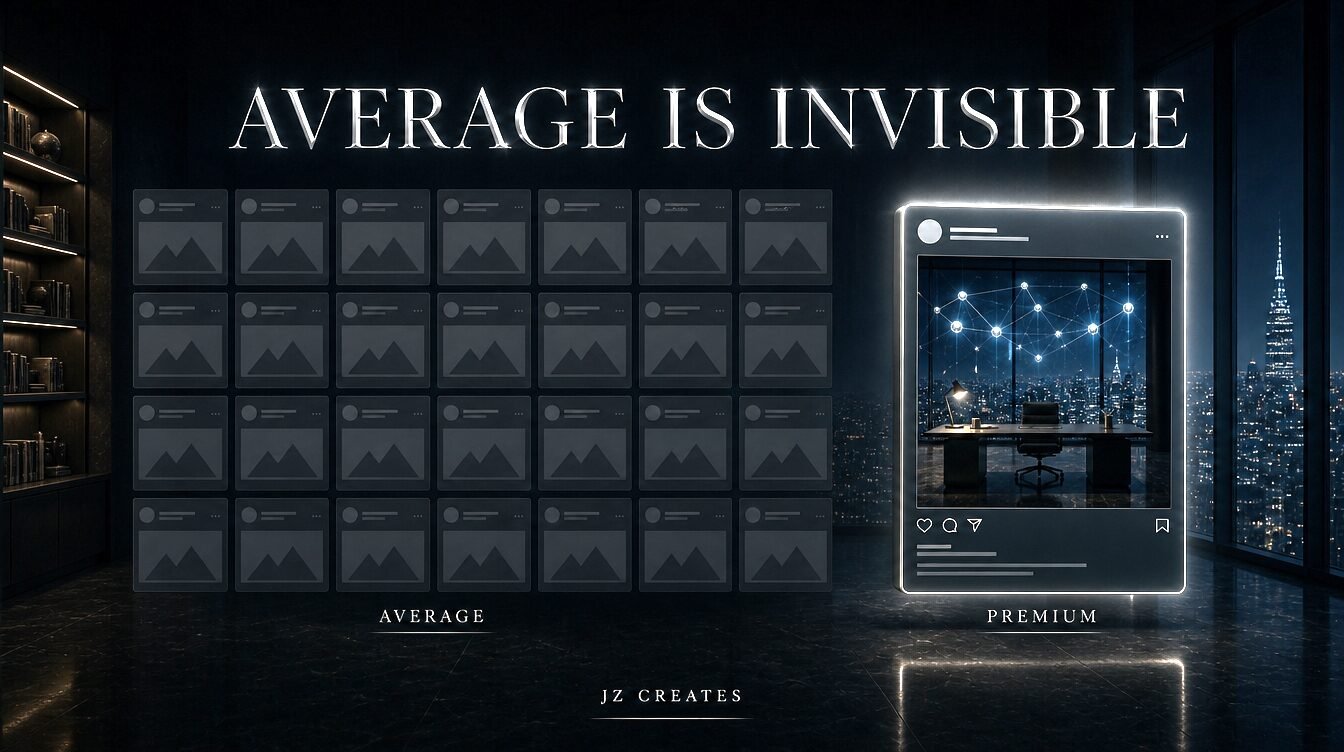
Most brands use AI like a cheap intern. Open a chatbot, ask for ten captions, paste the best one, call it a day. The problem is that when every brand in your category prompts the same tools the same way, you all produce the same content. AI does not invent original ideas by default. It produces the most average version of everything it has seen, and average does not get shared, ranked, or remembered.
The brands winning right now are doing the opposite. They are not using AI to do the same things faster. They are using it to offer things they never could before: a senior-level content engine, a research analyst, and an SEO specialist working every day at a price point that did not exist two years ago.
Automation is the multiplier. You do not automate to replace the creative thinking. You automate the distribution, the formatting, and the logistics so your people spend their hours on the part that actually requires a human. This is the heart of generative AI marketing in 2026: the agency model is changing because of exactly this, and the brands that internalize it will pull away from the ones still boosting average posts and hoping.
Why Solopreneurs Are Quietly Winning in 2026
Here is the part that genuinely excites us. Once you see what a roster of agents can do, you realize the possibilities are close to endless, and that changes who can start a business.
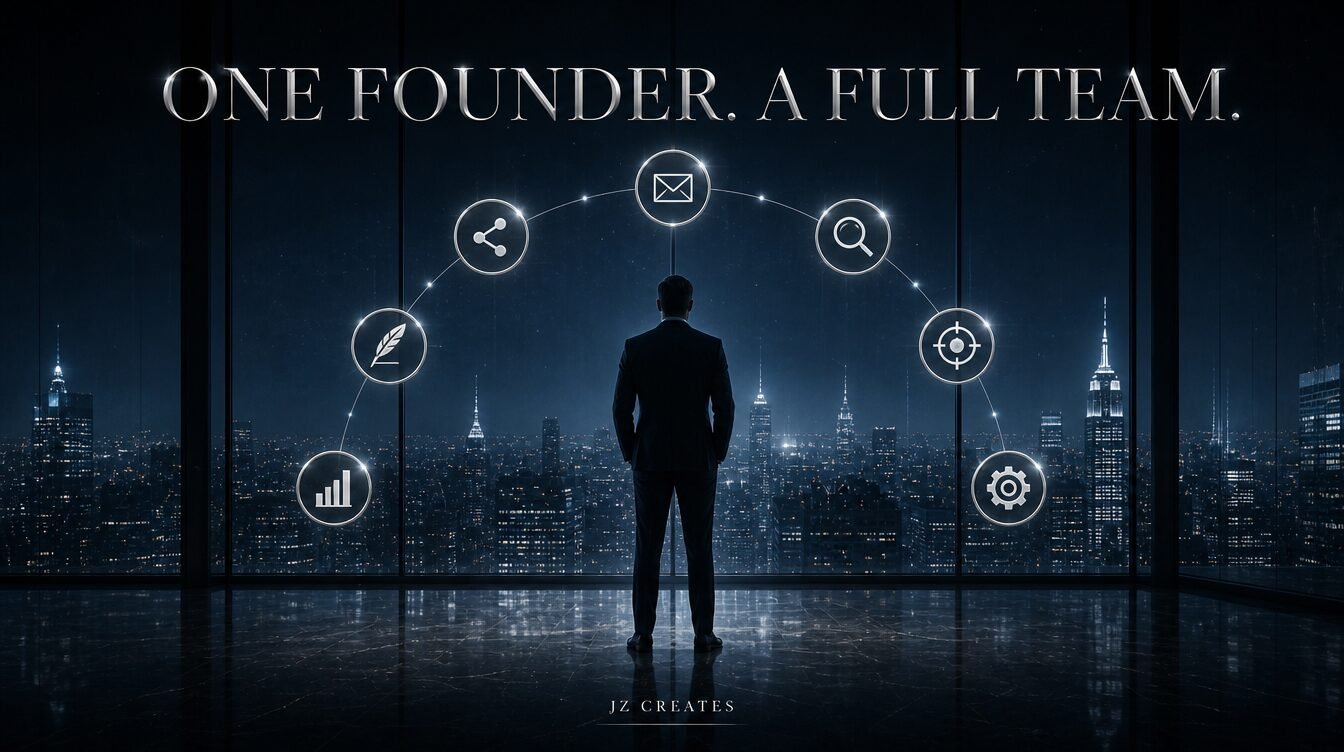
A few years ago, a brand like our watch client needed a content person, a social manager, an assistant, and an operations coordinator just to keep the lights on. Today one founder can run all of it with a roster of AI agents for small business doing the heavy lifting. That is not a prediction. It is why so many of the most interesting brands launching in 2026 are solo ventures: one person with taste and a point of view, backed by a team of agents that never sleeps.
The headcount you used to need to look big is now optional. The judgment and the creative direction are the parts that still have to be yours.
What We Actually Build at JZ Creates
We run JZ Creates, a creative agency in LA focused on content, AI, and automation for brands, and we are building AI Growth Z, our agency focused specifically on automation. So when we talk about an AI workforce, we are building these systems, not theorizing about them. We have already shipped two Chrome extensions for Instagram automation, and we wire these agent rosters together on tools like n8n and GoHighLevel, with voice and audio handled through ElevenLabs when a brand needs it.
Here is why we think a creative-led shop has the edge in this new category. Our background is 20 years at LA agencies producing campaigns for major studios, work that contributed to films like Wonder Woman and Jurassic World. That cinematic eye matters more now, not less, precisely because anyone can generate content. The brands that win are the ones whose output still looks and sounds premium. The agents handle the volume. The creative direction is what keeps it from looking like everyone else.
Building these rosters is the core of our AI creative services. If you want to see how it fits a real content engine, our breakdown of AI marketing automation agencies and how AI automation is changing what agencies deliver go deeper on the workflow side.
The Bottom Line
The brands that pull ahead in 2026 will not be the ones that bought the most AI tools. They will be the ones that hired a workforce. Seven agents on one brand brain, running content, social, newsletters, research, search, operations, and reporting while the competition checks voicemail on Monday.
You could not have hired a team like this two years ago. Your competitors mostly still have not. But you can build it now, and that window does not stay open forever.
If you want this built for your brand, let’s start a conversation. We will map out which agents would move the needle first and what your brand knowledge base needs to make them work.
Frequently Asked Questions About AI Agents for Business
What is an AI agent for business?
An AI agent for business is a software worker built on a large language model that handles a specific job with little or no human supervision. Unlike a basic chatbot, it plans a task, executes it across your tools, checks its own work, and reports the result. Trained on your brand’s data, a roster of these agents can run content, social, research, SEO, and reporting around the clock.
How is an AI employee different from just using ChatGPT?
ChatGPT is a tool you prompt one request at a time. An AI employee is configured for a defined role, runs on your brand’s knowledge base, follows your standards automatically, and works on a schedule without you typing anything. It is the difference between asking a stranger for advice and having a trained team member who already knows your business.
What jobs can AI agents actually do for a business?
Today, AI agents reliably handle writing blogs and newsletters, drafting and scheduling platform-native social content, researching new tools and trends, optimizing for both Google and AI answer engines, triaging email and drafting replies, setting up meetings, updating your project management tool, and compiling performance reports. They are strongest on repetitive, high-volume work, which frees your people for strategy and creative direction.
Are AI agents going to replace human employees?
In our experience, they replace the grind, not the people. AI agents take over the repetitive production and logistics so your team spends more time on the judgment, taste, and relationships that AI cannot do well. The brands seeing the best results pair a lean human team with a deep agent roster rather than cutting humans entirely.
How much does it cost to set up AI agents for a small business?
It varies with how many roles you deploy and how custom your knowledge base needs to be, but the economics have shifted dramatically. Work that once required several specialists can now run on a small agent roster at a fraction of the cost. The real investment is in organizing your brand data well, because that is what makes everything downstream work.
How do I get started with an AI workforce for my brand?
Start by building your brand knowledge base, then deploy one agent against your biggest bottleneck, usually content or social, before adding more. Get one role working cleanly, prove the output quality, then scale the roster. If you would rather not build it from scratch, that is exactly the kind of system we set up for brands at JZ Creates.

About Jay Hernandez
Jay Hernandez is an award-winning Creative Director with 20+ years of driving standout campaigns for top brands. Based in Los Angeles, he blends deep creative expertise with cutting-edge AI tools to help businesses and marketing teams unlock bold, breakthrough ideas that deliver real impact. If you are ready to elevate your brand and turn big visions into unforgettable campaigns, connect with Jay and make it happen.
Share This Article
Sponsored