AI Video Production in 2026: A Creative Agency Playbook
Sponsored
Sponsored
We run JZ Creates, a creative agency in Los Angeles focused on content, AI, and automation for brands. And the single biggest shift we have lived through this year is AI video production. Work that used to take a crew, a shoot day, and a five figure budget now starts on a keyboard. The catch is that AI video production only looks premium when a real creative team drives it. Here is exactly how we do it for clients, and how you can think about it for your brand.
This is not a theory piece. It is the workflow we use, the places it wins, and the honest limits we tell every client about before we start.
Key Takeaways
- AI video production means generating and assembling brand video with AI models instead of a full traditional shoot, then finishing it with a human creative eye.
- The win for marketing teams is speed and cost: concepts that took weeks now turn around in days, often for a fraction of a traditional production budget.
- The quality gap is no longer the tool. It is the creative direction, the prompt craft, and the edit. Great input still decides great output.
- It works best for social first content, product and concept films, and campaign variations at scale. It is weaker for anything needing exact brand faces or precise product accuracy.
- We treat the tools as a production stack, not a magic button. The creative thinking is still the job.
What AI Video Production Actually Means in 2026
A few years ago, producing a polished brand video meant a director, a crew, a location, and weeks of post. AI video production compresses that. We describe a scene, generate it with a video model, then shape the results into something on brand.
The models did the heavy lifting on realism this year. Tools like Google Veo pushed motion and lighting to a place that reads as real footage on a phone screen. That is the screen that matters for most of our clients.
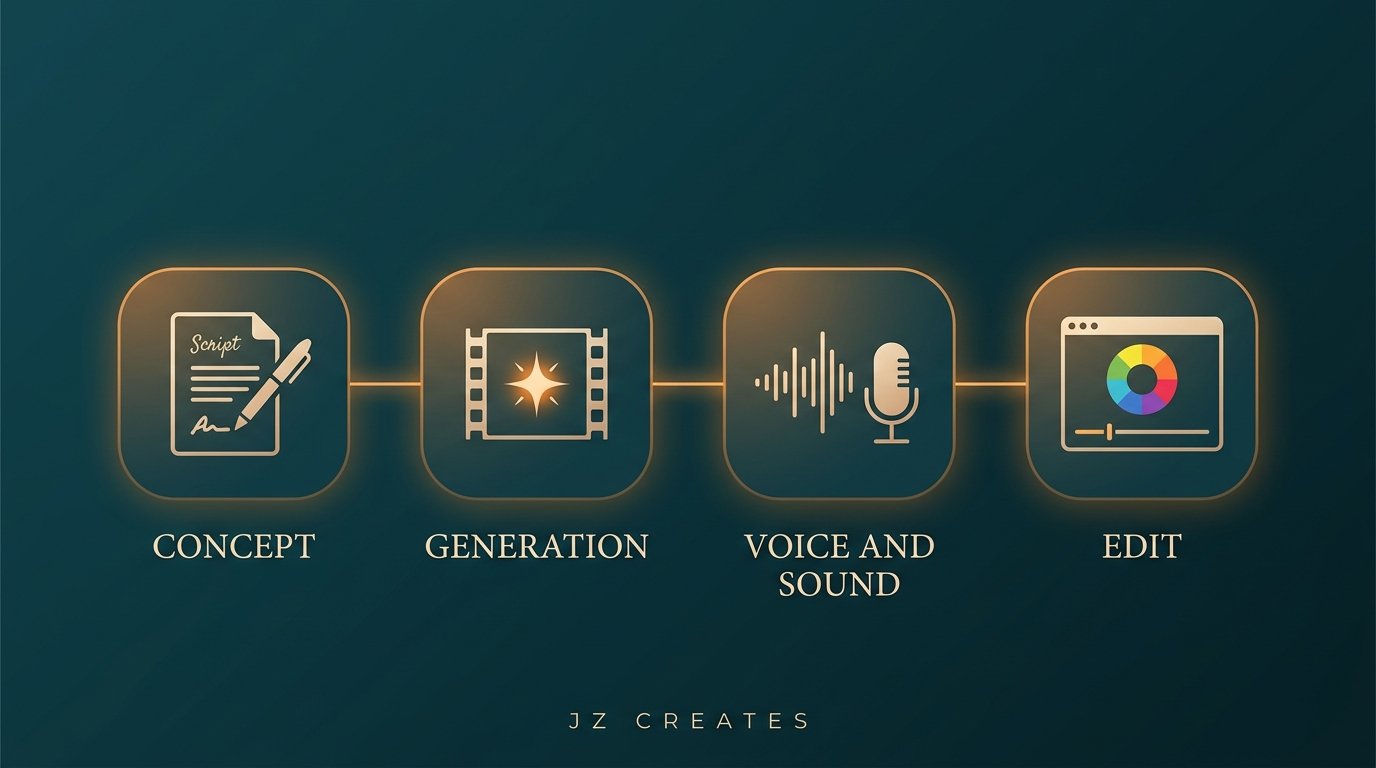
Here is the part marketers miss. AI powered video creation is not one tool. It is a chain: idea, script, image or video generation, voice, sound, and edit. Each link needs a creative decision. Skip the decisions and you get generic output. Make them well and you get something that looks like a brand spent real money. If you want the wider view on where this fits, we broke it down in our piece on generative AI marketing in 2026.
Our AI Video Production Workflow, Start to Finish
This is the actual order we run for a client brand video. Nothing here is exotic. The discipline is in doing each step with intent.
1. Concept and script come first, always
We start with the idea and the script, not the tool. What is the one thing this video needs to make a viewer feel or do? We often draft and refine scripts with Claude, then lock the beats before a single frame is generated. A weak concept generated in 4K is still a weak concept.
2. Generation is where AI video production saves the most time
Once the beats are locked, we generate. We pull from a stack of models depending on the look: cinematic motion, stylized scenes, or fast social cuts. This is the step that replaces the shoot day. What used to be a location and a crew becomes a set of prompts and iterations.
We generate more than we need on purpose. Ten options, keep two. That abundance is a feature of AI video for marketing: you can explore directions that a single shoot day would never allow.
3. Voice and sound make it feel produced
Silent AI clips feel like tech demos. Produced video has a voice, a score, and sound design. We use ElevenLabs for natural voiceover, including cloned brand voices, and license music and sound from libraries like Envato Elements. This layer is what separates a clip from a commercial.
4. Edit and finish with a human eye
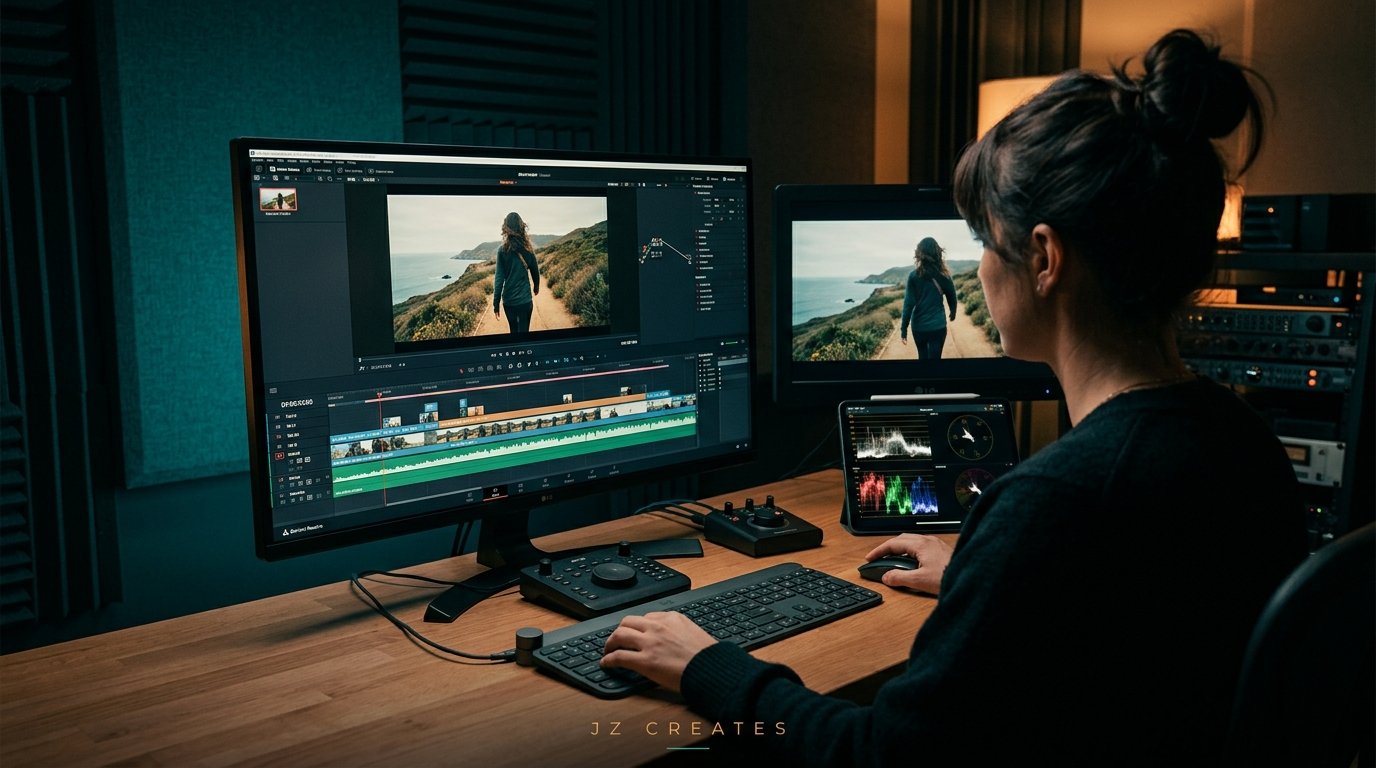
Everything comes together in the edit. We assemble, color, pace, and finish in tools like DaVinci Resolve and CapCut. The edit is where 20 years of agency instinct still earns its keep, and where an AI first draft becomes a brand asset. If you want to see the tradeoff spelled out against traditional shoots, here is our AI video vs traditional production comparison.
Where AI Video Production Wins for Brands
Not every project is a fit. These are the ones where we reach for AI first.
Social first content at volume. A music festival client needs fresh, on trend clips every week during a season. AI video production lets us keep a feed alive without a shoot for every post. We wrote about brands doing exactly this in our World Cup AI reels breakdown.
Concept and product films. For a consumer product launch on a tight budget, we can visualize the product in ten environments before lunch. That used to be a location scout and a shoot.
Campaign variations at scale. One idea, twelve versions for twelve audiences. Generating variants is where ai video for brands quietly changes the math on a campaign.
The throughline is our belief that great creative equals great results. AI does not change that equation. It just lets a small, sharp team produce more of the good stuff. That is the same reason we bundle it into our AI creative services and wire the repetitive parts into AI creative automation.
The Limits We Tell Clients About
We would rather set expectations than oversell. Honest limits build trust with the CMOs we work with.
- Exact brand faces and real people. If a campaign needs a specific spokesperson or real talent, AI generation is not the tool for the hero shots. It supports, it does not replace.
- Precise product accuracy. For products where every logo and label must be exact, we still shoot or composite. AI is close, not pixel perfect.
- Consistency across a long piece. Holding a character or set identical across a two minute film takes real effort. Short form is far more forgiving.
None of these are reasons to skip AI video production. They are reasons to use a team that knows when to reach for it and when not to. That judgment is the service.
What We Actually Use at JZ Creates
For anyone who wants our current stack, here is the honest list:
- Video generation: a rotating set of the strongest models of the moment (Kling, Seedream, Veo) chosen per look.
- Voice: ElevenLabs for voiceover and cloned brand voices, Envato for music and sound.
- Creative and assets: Adobe Creative Cloud and Envato.
- Edit and finish: DaVinci Resolve and CapCut.
- Automation and scripting: Claude and n8n to move drafts, formats, and logistics so we spend our time on the creative, not the busywork.
We test these obsessively, because the stack that is best today shifts every few months. That is the job.
The Bottom Line
AI video production in 2026 is real, it is fast, and it is good enough for brand work when a creative team drives it. The tools lowered the cost of trying ideas to almost nothing. What did not change is that the idea, the taste, and the edit still decide whether a video earns attention.
If your brand wants premium video without the premium timeline, that is exactly what we do. Reach out and let’s talk about what we can make together.
Frequently Asked Questions
What is AI video production?
AI video production is the process of creating brand video using AI models to generate scenes and motion, then finishing the result with human editing, voice, and sound. It replaces much of a traditional shoot while keeping a creative team in control of quality.
Is AI video good enough for real brand campaigns?
Yes, for the right use cases. On a phone screen, the best 2026 models read as real footage. The deciding factor is the creative direction and the edit, not the raw tool. For hero shots that need exact talent or precise product detail, traditional production still wins.
How much does AI video production cost compared to a traditional shoot?
It varies by project, but the savings are usually large. Removing the location, crew, and shoot day often takes a production from a five figure budget to a fraction of that, with a turnaround measured in days instead of weeks.
Which AI video tools do you use?
We use a rotating stack chosen per look, including Kling, Seedream, and Veo for generation, ElevenLabs for voice, and DaVinci Resolve and CapCut for the edit. The best models change every few months, so the stack is never fixed.
Can AI video production match our brand style?
Yes, when it is directed. We lock the concept, palette, and voice first, then generate and edit toward that. The brand consistency comes from the creative decisions around the tools, which is the part a studio brings.

About Jay Hernandez
Jay Hernandez is an award-winning Creative Director with 20+ years of driving standout campaigns for top brands. Based in Los Angeles, he blends deep creative expertise with cutting-edge AI tools to help businesses and marketing teams unlock bold, breakthrough ideas that deliver real impact. If you are ready to elevate your brand and turn big visions into unforgettable campaigns, connect with Jay and make it happen.
Share This Article
Sponsored