AI Content Automation: The Exact System Running Our Blog Every Week
Sponsored
Sponsored
Key Takeaways
- AI content automation is not one tool, it is a chain of small handoffs (research, drafting, imagery, publishing, distribution) where each step trusts the one before it.
- The parts worth automating are the repetitive, high volume steps: pulling keyword data, formatting for WordPress, scheduling, cross posting. The parts worth protecting are angle, opinion, and the final read through.
- Claude and n8n are doing most of the heavy lifting in our own pipeline right now, with Claude handling reasoning and drafting and n8n handling the plumbing between tools.
- A good automation stops itself when something looks wrong instead of confidently publishing a weak result. That single design choice separates a useful system from a liability.
- Most teams that “try automation” bolt one AI step onto an otherwise manual process. The bigger wins show up once research, writing, imagery, and publishing are wired together end to end.
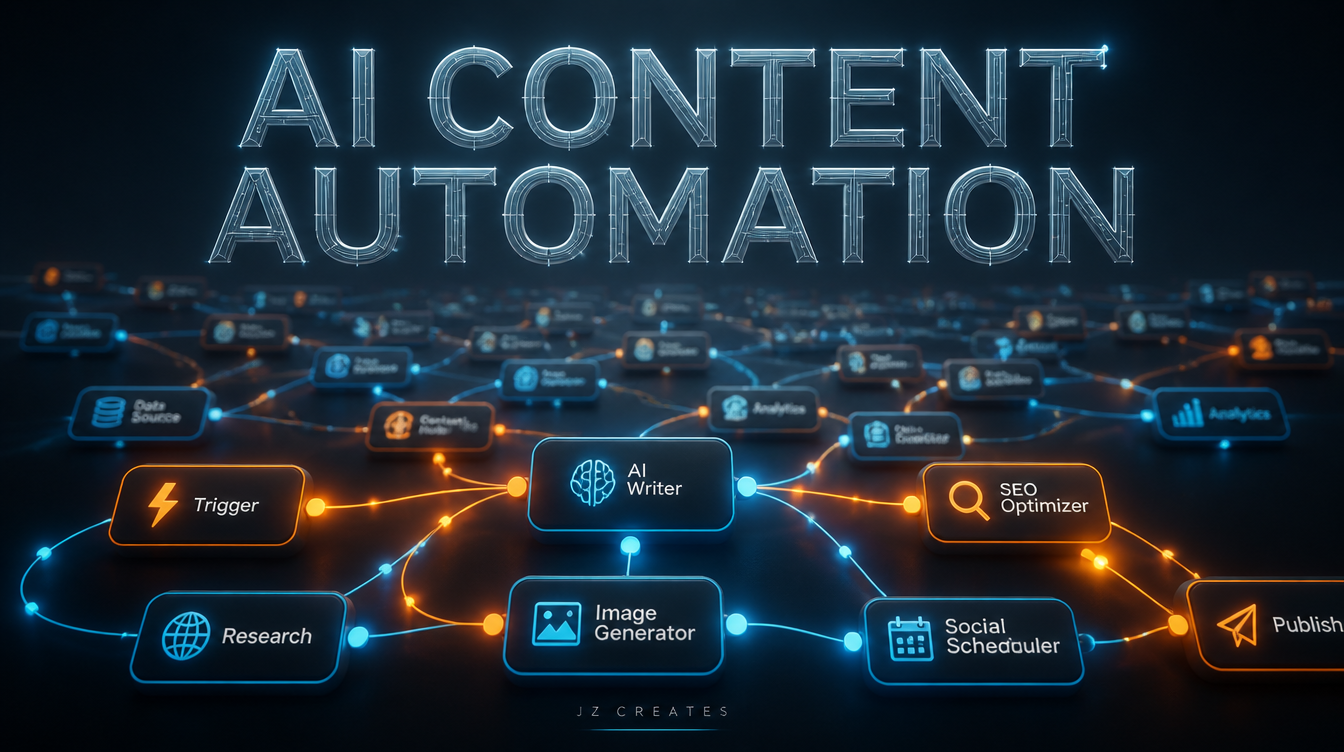
We wrote this article the way we write every article on this blog now: a queue of topics sits in a content calendar, an automation pulls the next one, and a chain of AI steps takes it from a one line brief to a published post with images and a schedule date, without anyone opening a blank document first. That is not a hypothetical we are describing to sound impressive. It is literally how this post got made, and we are going to walk through what that looks like, what still needs a person, and where teams usually get it wrong.
What Does AI Content Automation Actually Mean Day To Day
When people hear “content automation” they usually picture a robot writing whatever it wants and hitting publish. That is not what is happening here, and it is not what we would recommend to anyone building this for real.
What is actually happening: a spreadsheet or database holds a queue of approved topics, each with a keyword and an angle. A scheduled job wakes up, grabs the next item, and routes it through a series of steps. Some steps are AI reasoning (drafting, choosing an angle, writing image prompts). Some steps are plain automation with no AI involved at all, built in a workflow tool like n8n (renaming files, uploading images, setting a publish date). The AI does the thinking. The automation does the moving parts, and that distinction is where the hours actually get saved.
What Does The Actual Pipeline Look Like
Here is the real sequence we run, stripped down to the parts that generalize to any brand’s content operation, not just ours:
- Pull the next topic from a content calendar (we use Airtable), tagged with a keyword, an angle, and a priority order.
- Draft the article with Claude, following a locked style guide, a set of voice files, and structural rules we have refined over more than a dozen published posts.
- Generate the imagery, matching the cover’s palette and typography so the cover, in-post images, and social assets all feel like one set instead of three unrelated files.
- Publish on a schedule, not instantly, so there is always a window to catch something before it goes live to real readers.
- Notify the team with a preview link the moment it is scheduled, so review happens in a chat message instead of a status meeting.
None of those five steps is exotic on its own. The value comes from chaining them so nobody has to manually hand off a file between steps 2 and 3, or remember to schedule step 4.
Here is roughly the kind of instruction we hand Claude at the drafting step, simplified from what actually runs:
“Write this article in our locked voice and structure, choose the single best angle from the notes provided, and record which structural pattern you used so the next article picks a different one.”
That last part, telling the system to record and vary its own structural choices, is the difference between an automation that produces one article and an automation that can produce fifty without them all reading identically.
What Still Requires A Human In The Loop
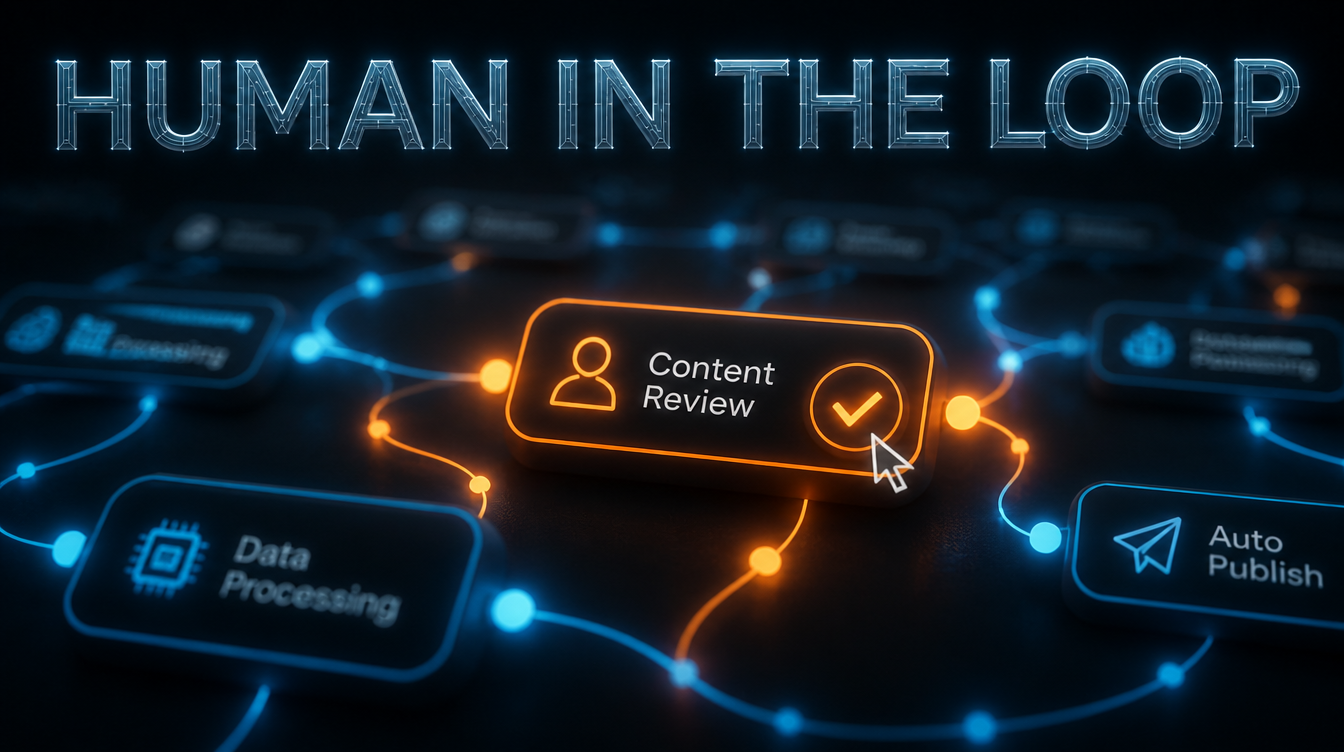
We get asked this constantly by marketing directors: does this replace the writer? No, and we would not want it to. What it replaces is the blank page problem and the repetitive formatting work. What it does not replace is judgment.
A person still sets the topic queue, the voice rules, the brand guardrails, and the publish schedule. A person still spot checks the output before it reaches a real audience, even on a system that has run cleanly for weeks. The moment you remove that check because the system has been reliable, you have built a liability, not a shortcut.
Most teams either automate nothing and burn hours on manual formatting, or they automate everything including the judgment calls and end up with content that technically ships but does not sound like anyone. The middle path, where a model like Claude drafts and a human still owns the final call, is where the real advantage sits.
Does This Replace Our Writers Or Just Our Busywork
Just the busywork, and we mean that literally. Before this pipeline existed, a single blog post took several hours across research, drafting, formatting for WordPress, sourcing images, and manually scheduling social posts. Most of that time was not creative thinking. It was moving information from one place to another.
What changed is not that ideas got automated. It is that the distance between “we have an approved idea” and “it is live with images and a schedule” shrank from days to under an hour of system runtime, with a human checkpoint before anything reaches a reader. For a marketing team publishing across a blog, YouTube, and social every week, whether the client is a consumer product brand, a music festival, or a book author, that time back adds up fast.
What About Distribution, Does That Get Automated Too
Yes, and this is usually where teams see the fastest return. Writing one good post is valuable. Getting it in front of the right audience across every channel without manually re-formatting it five times is where automation earns its keep.
We route finished content through Blotato for cross platform scheduling once a post goes live, so the same story reaches social channels without anyone copying captions into five different apps. On the research side, we lean on DataForSEO to sanity check keyword volume and difficulty before committing a full article to a topic. Documents, briefs, and image approvals move through Google Workspace, unglamorous but essential: a pipeline lives or dies on whether the right file is in the right folder when the next step reaches for it.
What Mistakes Do Teams Make When They Automate Content
The most common one: bolting a single AI step onto an otherwise manual process and calling it automation. A brand uses AI to draft a caption, then still manually uploads it, resizes the image, and schedules the post by hand. That is a slightly faster manual process, not automation, and it caps out fast.
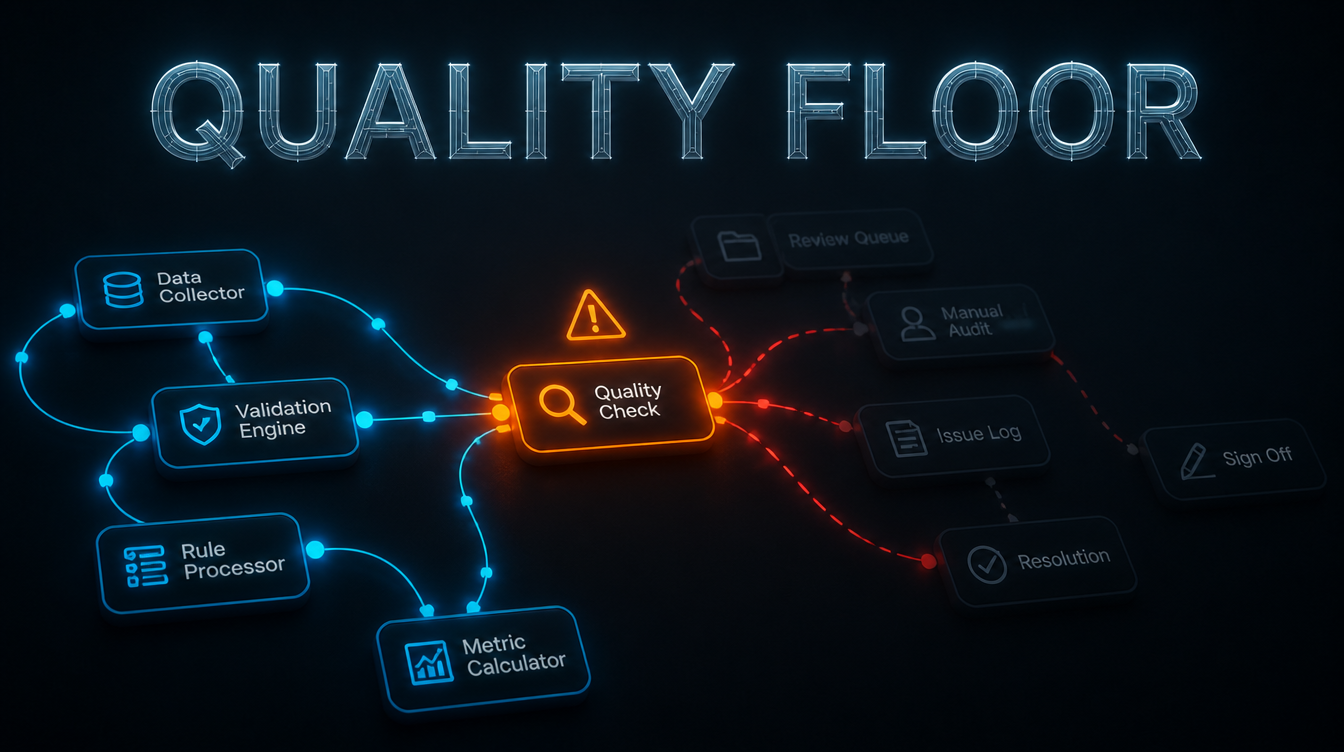
The second mistake is building a system with no way to notice when something looks wrong. If a pipeline can publish a broken image or a half finished post with the same confidence as a good one, it eventually will. Every automation we build for a client includes a moment where the system checks its own work against a quality floor, and if that floor is not met, it stops and flags a person instead of guessing.
The third mistake is treating voice and brand rules as optional. An automated pipeline follows whatever instructions it is given with total consistency, which means sloppy brand guidelines produce sloppy content at scale, just faster than before.
Is This Actually Worth Building For A Marketing Team
If your team is publishing content once a month, probably not yet, the setup cost is not worth it. If your team is trying to publish weekly across a blog, a newsletter, and social, and the bottleneck is always “someone needs to have time to write this,” then yes, this is exactly the kind of system that changes the math.
The pattern shows up constantly with teams that have good ideas and not enough hours to execute them consistently. The automation does not generate the ideas. It removes the friction between having an idea and having it live.
What We Actually Use At JZ Creates
We run JZ Creates, a creative agency in Los Angeles offering AI creative services for brands, and this is the actual stack behind our own content pipeline, no filler:
- Claude for drafting, structuring, and reasoning through which angle a topic deserves
- n8n for wiring the individual steps together into one pipeline instead of a pile of disconnected scripts
- Blotato for cross platform social scheduling once a post goes live
- DataForSEO for keyword and difficulty checks before a topic gets a full article
- Google Workspace for the document and asset handoffs between steps
We are also actively building out AI Growth Z, a venture focused specifically on this kind of automation work for other brands and creators, alongside the two Chrome extensions we have already shipped for Instagram automation.
The Bottom Line
If your team is stuck rebuilding the same manual steps every time a piece of content goes out, that is exactly the kind of bottleneck AI automation services are built to remove. At JZ Creates, we produce captivating, engaging content for brands across consumer products, luxury, entertainment, music, and more, and we build the systems that get that content out the door faster without cutting corners on quality.
If you want a second set of eyes on your own content pipeline, or you are starting from a blank page and want one built, reach out to our team and let’s talk through what your workflow actually needs.
FAQ
Does AI content automation mean nobody writes anything by hand anymore?
No. It means the drafting step is faster and more consistent, but a person still sets the topic, the brand voice rules, and reviews the output before it publishes. The goal is removing repetitive work, not removing judgment.
What is the difference between AI content automation and just using ChatGPT to write posts?
Using an AI model to write one document is a single step. Automation connects that step to research, image generation, formatting, publishing, and distribution so the whole chain runs without manual handoffs between each stage.
Which parts of a content pipeline are safest to automate first?
Formatting, scheduling, and distribution are the easiest starting points because they are repetitive and low risk. Drafting and imagery can follow once you have a locked style guide the system can actually follow consistently.
Do we still need to check the content before it publishes?
Yes, always. We schedule everything with a buffer window specifically so a person can catch and fix anything before it reaches a real audience, even on a pipeline that has run reliably for months.
Is this related to what people call AI agents for business?
Related, yes. Read more on how we think about that in our piece on AI agents for business, which covers the broader shift beyond just content.
How is this different from automating social media posting alone?
Social automation alone only handles the last step of the chain. We cover that specific piece in our article on AI social media automation, but the real gains come from automating everything upstream of that too, including the research and drafting that feeds it.

About Jay Hernandez
Jay Hernandez is an award-winning Creative Director with 20+ years of driving standout campaigns for top brands. Based in Los Angeles, he blends deep creative expertise with cutting-edge AI tools to help businesses and marketing teams unlock bold, breakthrough ideas that deliver real impact. If you are ready to elevate your brand and turn big visions into unforgettable campaigns, connect with Jay and make it happen.
Share This Article
Sponsored