Best AI Image Generator for Brands in 2026, by Use Case
Sponsored
Sponsored
Key Takeaways
- The best AI image generator depends on the job: product shots, text-heavy ads, campaign key art, and brand consistency each have a different winner.
- For in-image text and layout control, OpenAI’s GPT Image models lead. For editing and keeping a product or character consistent across many images, Google’s Nano Banana models lead.
- Flux 2 Pro is the photorealism pick, Ideogram V3 is the poster and logo pick, and Adobe Firefly is the pick when legal review wants licensed training data.
- Brand consistency comes from a system (reference images, a prompt template, a retouch pass, a review gate), not from any single model.
- Purely AI generated images can’t be copyrighted in the US without meaningful human authorship, so plan your creative process with that in mind.
Search “best AI image generator” and you’ll get 15 tools ranked by how pretty their sample images look. That’s a fun read if you’re making wallpaper. It answers a different question than the one a marketing leader has when they need a hero product shot by Friday, a dozen ad variations with readable headlines, and a legal team that asks where the training data came from.
So we ran the question the other way around. Instead of ranking tools, we ranked jobs, and named the model that wins each one in real brand production.
What Makes the Best AI Image Generator for Brand Work?
The best AI image generator for brand work is the model that produces on-brief, on-brand images you can actually publish: accurate products, readable text, consistent characters and styling across a whole campaign, and clear commercial-use terms. Raw beauty matters less than control, consistency, and how many tries it takes to get a usable frame.
A model that nails the shot in three generations beats a “better” one that needs thirty. We judge tools on five things:
- Instruction following. Does it do what the brief says, including small details like label wording and product color?
- Text rendering. Can it spell a headline correctly inside the image?
- Reference control. Can you feed it your product, your talent, or your style and get that back?
- Editing. Can you change one thing without the whole image drifting?
- Commercial clarity. Are the training data and usage terms something your legal team can sign off on?
The Best AI Image Generator by Use Case
Here’s the short answer, by job. Every model in this table is one we run in production.
| Brand job | Our pick | Why it wins |
|---|---|---|
| Ad layouts with headlines | GPT Image | Strongest instruction following and in-image text |
| Product and character consistency | Nano Banana 2 / Pro | Multi-reference editing that keeps details intact |
| Photorealistic lifestyle and product | Flux 2 Pro | Camera-like texture, skin, and lighting |
| Posters, logos, type-led graphics | Ideogram V3 | Typography is its home turf |
| Fast exploration at volume | Seedream 4.5 | Quick, affordable, great for direction finding |
| Legal-sensitive campaigns | Adobe Firefly | Trained on licensed and public domain content |
Swipe sideways to see the full table →
There’s no single winner. Most campaigns use two or three of these, which is why we access them through one pay as you go account on Kie.ai instead of stacking subscriptions.
Product Shots: The Best AI Image Generator for Realistic Photos
For pure photorealism, Flux 2 Pro from Black Forest Labs is our go-to. It handles the details that give away a fake product shot: how light wraps around glass, how fabric folds, how skin reads up close. For a luxury skincare brand or a consumer product launch, that texture is the difference between “nice render” and “wait, is that a photo?”
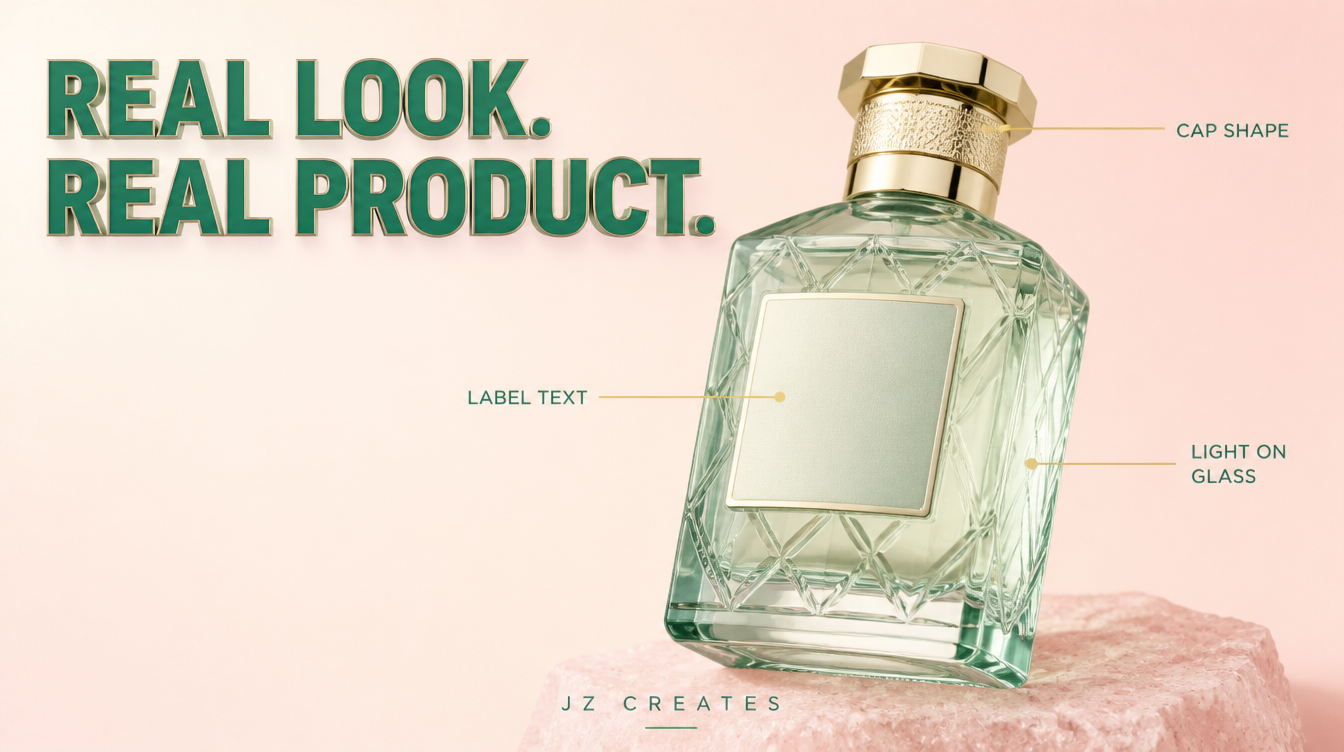
The catch is that realism and accuracy are two different things. A gorgeous shot with the wrong cap shape or a misspelled label is still the wrong shot. That’s where Nano Banana comes in. Google’s Nano Banana 2 and Nano Banana Pro accept multiple reference images, so you can hand them the real product and get it back in a new scene with the details intact. Our Nano Banana Pro examples and prompts show exactly how far that goes.
Our rule for AI product photography: generate the world with Flux, protect the product with Nano Banana, and always compare the final against the physical item before it ships.
Text, Logos and Ad Layouts
Paid social lives on the headline. If the model can’t spell “Summer Sale,” you’re back in a design tool fixing it by hand.
Why Text Rendering Decides the Best AI Image Generator for Ads
OpenAI’s GPT Image models are the strongest we’ve used for text inside an image. GPT Image 2.5, which launched in ChatGPT in September 2026, got labels, legends, and titles right in our testing, and it holds a layout through multiple rounds of edits. We broke that down in our GPT Image 2.5 use cases piece.
Ideogram V3 is the specialist. When the type IS the design (a festival lineup poster, a book launch graphic for an author, a bold logo exploration), Ideogram gives you more typographic personality than a general model. We still set final brand fonts in Adobe for anything that goes to print.
Ad layout template: “Square social ad for [BRAND], [PRODUCT] centered on a [BACKGROUND], soft studio light from the left, headline at top in a clean sans-serif: ‘[HEADLINE]’, small CTA button at bottom right: ‘[CTA]’, brand colors [HEX 1] and [HEX 2], generous margins, no extra text.”
Swap the brackets, keep the structure, and you’ll get dozens of consistent variations for testing.
Campaign Key Art and Style
Key art is where taste matters most. A music festival wants a poster that feels like the lineup sounds. An entertainment launch wants one image that carries the whole campaign.
This is exploration work, and speed wins. We open with Seedream 4.5 to generate a wide spread of directions affordably, pick the two or three that have a real idea in them, then rebuild the winner in GPT Image or Flux for final quality. Exploring wide and finishing narrow keeps budgets sane.
“The model renders the image. The idea is still yours.”
The quality ceiling keeps rising, so the creative thinking behind the prompt is now the differentiator. If you want to see how we build full campaigns around this, our AI creative services page has examples.
Keeping Every Image On Brand
One great image is easy. Two hundred images that all look like the same brand is the real job, and no model does it for you out of the box. Consistency is a system you build around the model.
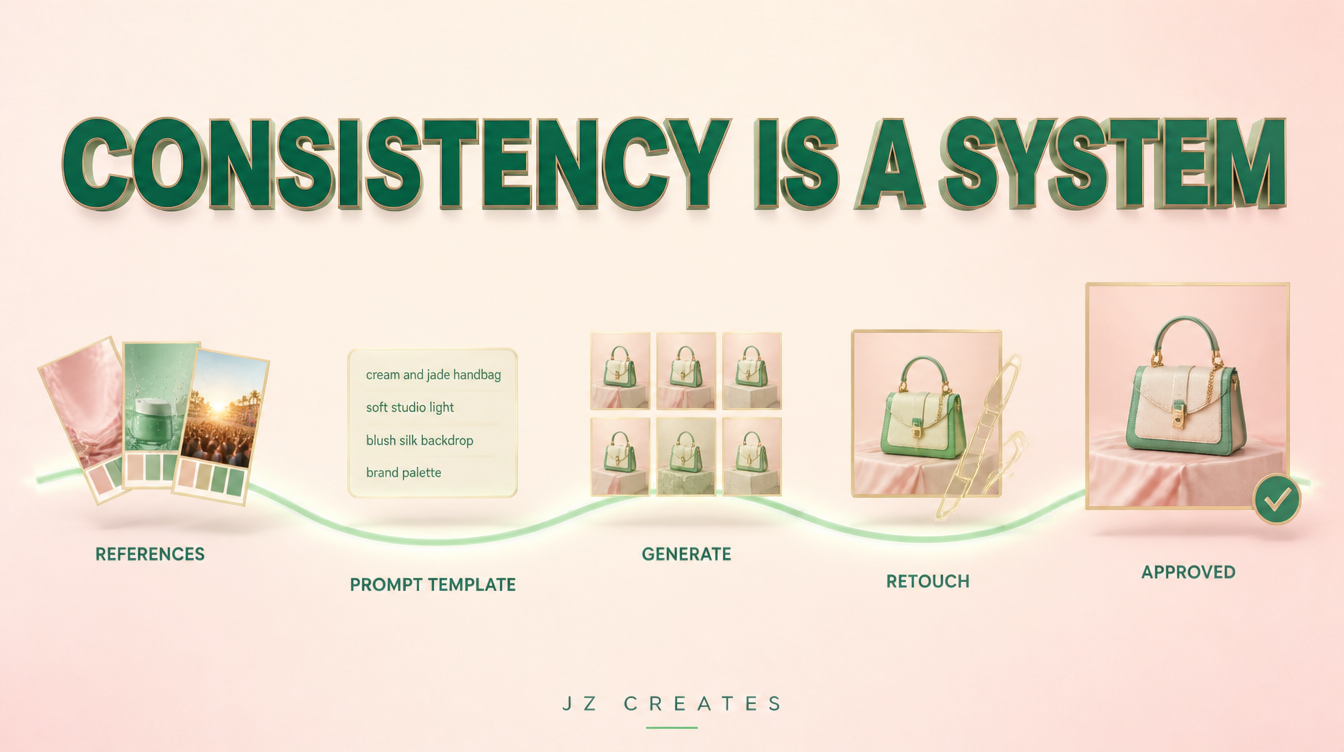
Here’s the system we run for clients:
- Lock the references. Approved product shots, talent, color palette, and two or three style frames go into a shared reference set.
- Write the prompt template once. Lighting, lens, palette, composition rules, and banned elements live in one master prompt. We draft and refine these with Claude.
- Generate with references attached. Nano Banana and GPT Image both take reference images, which is what keeps image 150 looking like image 1.
- Retouch and composite. Final cleanup happens in Adobe, often mixed with licensed textures and graphics from Envato Elements.
- Review and log. Every approved asset gets tracked in Airtable with its prompt and model, so the next round starts from what worked.
Once the template and review gate exist, the repetitive steps can run on their own, which is what our AI automation services are built for.
Is There a Best Free AI Image Generator?
Yes, with limits. ChatGPT, Google’s Gemini app (which runs Nano Banana), and Adobe Firefly all offer free image generation with daily or monthly caps at the time of writing. Free tiers are great for testing ideas. For brand production, paid access usually buys higher resolution, more generations, and clearer commercial terms.
Use the free tiers to learn what each model does best, then pay only for the models your jobs actually need.
Are AI Image Generators Legal for Commercial Use?
AI image generators are legal to use, and brands use them in commercial campaigns every day. The real questions are ownership and risk. The US Copyright Office has said purely AI generated material isn’t copyrightable without meaningful human authorship, so protectable work needs real human creative input.
Three checks we run before anything ships:
- Training data. If legal wants the most conservative option, Adobe Firefly is trained on licensed Adobe Stock and public domain content.
- Likeness. No real person’s face or voice without consent and a contract.
- Trademarks. No other brand’s logos, packaging, or characters sneaking into a scene.
What We Actually Use at JZ Creates
We run JZ Creates, a creative agency in Los Angeles focused on content, AI, and automation for brands across consumer products, luxury, music festivals, authors, entertainment, and events. Our team spent 20+ years at LA creative agencies producing campaigns for major Hollywood studios, so every image still gets judged the old way: does it sell the idea?
Our image stack: Kie.ai for pay as you go access to GPT Image, Nano Banana, Flux, Ideogram, and Seedream from one account. Adobe Firefly and Photoshop for licensed generation and final retouching. Envato Elements for licensed textures, fonts, and graphics. Claude for prompt templates and creative briefs. Airtable for asset tracking and approvals. Blotato for pushing finished visuals out to every social channel. For a designer-focused take, see our earlier list of AI image generators for designers.
The Bottom Line
If you need campaign images, product visuals, or a full library of on-brand AI creative built and managed for your team, that’s exactly what we do every day. At JZ Creates, we specialize in producing captivating and engaging content for social and digital media. If your project needs highly creative content, contact us so we can bring your vision to life!
Frequently Asked Questions
What’s the best AI image generator at the moment?
It depends on the job. For brand work in 2026, GPT Image leads for ads with readable text, Nano Banana 2 and Pro lead for editing and product consistency, Flux 2 Pro leads for photorealism, Ideogram V3 leads for posters and logos, and Adobe Firefly is the safest pick when licensed training data matters.
What is the best AI image generator for realistic photos?
Flux 2 Pro produces the most camera-like texture, skin, and lighting in our production work. For product shots where the real item has to stay accurate, pair it with Nano Banana, which accepts reference images of the actual product. Always compare the final image against the physical product before publishing.
Which AI image generator is totally free?
No serious option is unlimited and free. ChatGPT, Google’s Gemini app, and Adobe Firefly all offer free image generation with daily or monthly caps at the time of writing. Free tiers are ideal for testing. Brand production usually needs paid access for higher resolution, more generations, and clearer commercial terms.
Are AI image generators illegal?
No. AI image generators are legal and widely used in commercial advertising. The considerations are ownership and risk: the US Copyright Office says purely AI generated images aren’t copyrightable without meaningful human authorship, and brands should avoid real people’s likenesses without consent and other companies’ trademarks.
Can ChatGPT create an image for me?
Yes. ChatGPT generates images with OpenAI’s GPT Image models, including GPT Image 2.5, released in September 2026. Describe the image you want, including subject, style, lighting, and any text, and ChatGPT will create it. You can then ask for edits in plain language and refine the image over several rounds.

About Jay Hernandez
Jay Hernandez is an award-winning Creative Director with 20+ years of driving standout campaigns for top brands. Based in Los Angeles, he blends deep creative expertise with cutting-edge AI tools to help businesses and marketing teams unlock bold, breakthrough ideas that deliver real impact. If you are ready to elevate your brand and turn big visions into unforgettable campaigns, connect with Jay and make it happen.
Share This Article
Sponsored