Generative AI Advertising: Where It Fits in Brand Campaigns
Sponsored
Sponsored
Key Takeaways
- Generative AI advertising works best as a production and versioning engine, while the campaign idea and the brand judgment stay with people.
- The real shift is volume with consistency: one strong concept can now ship as dozens of on-brand executions across formats, audiences, and markets.
- Brand campaigns still win on a single, ownable idea. AI multiplies that idea. It can’t hand you the reason people care.
- Put AI to work in concepting sprints, previsualization, asset production, and localization. Keep strategy, casting, and final approvals human.
- Disclosure and provenance are becoming part of the brief, so build them in from day one instead of bolting them on at launch.
Here’s a question we keep hearing from CMOs this year: if a machine can make the ad, what exactly is the campaign?
It’s a fair question. Generative AI advertising has moved out of the novelty spot and the experimental holiday film and into the everyday production line of real brand work. And the rules for what makes a campaign great are quietly being rewritten. Not replaced. Rewritten.
This is our point of view on where generative AI genuinely earns its place in a brand campaign, where people still carry the load, and how to structure the work so the brand gets sharper with every asset instead of blurrier.
The Campaign Idea Is Still the Whole Game
Every campaign that ever mattered was built on one ownable idea. A feeling, a tension, a line people repeat at dinner. Generative tools make execution abundant, and when execution is abundant, the idea becomes more valuable, not less.
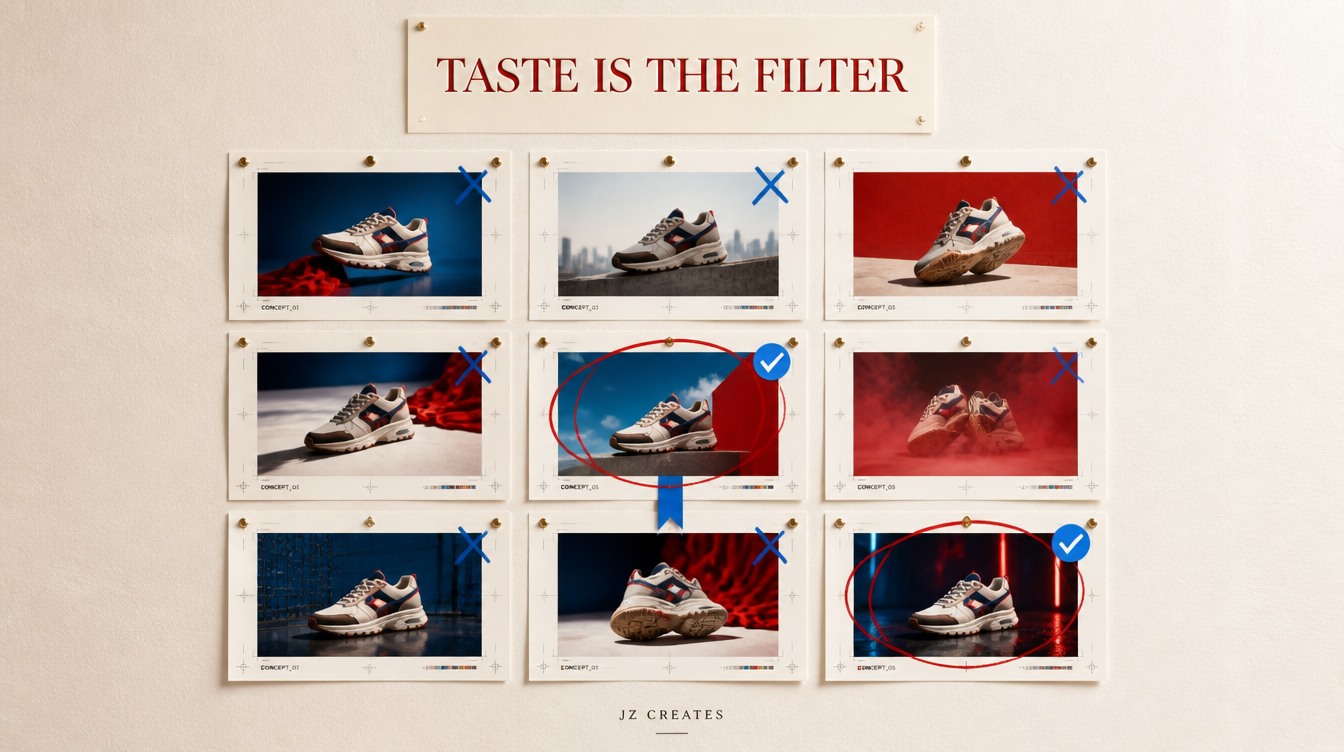
Think about a fragrance launch. A model can give your team forty visual directions for the hero film in an afternoon: desert dusk, rain on marble, a slow dance in an empty ballroom. That’s incredible. But someone still has to look at those forty frames and know, instantly, which one feels like the house.
“AI is a tool, not a talent. The creativity still has to come from somewhere.”
That’s the part no model supplies. Taste, context, and the courage to pick one direction and commit. We made a similar case in our generative AI marketing breakdown, and it holds even more strongly at the campaign level, where a single idea has to carry a brand for a full season.
What Generative AI Advertising Changes in the Production Line
If the idea stays human, where does the change actually land? Inside the production line. Three shifts stand out in the work we see every week.
Concepting sprints move from weeks to an afternoon
The first round of territories used to mean days of mood boards and a round of rough comps. Now a creative team can write five campaign territories with Claude, generate key frames for each, and walk into the Monday meeting with something that looks close to finished.
The win isn’t speed for its own sake. It’s that stakeholders react to real pictures instead of abstract descriptions, so the conversation gets honest much earlier.
Previsualization gets real enough to sell the idea
This is the one that changes budgets. Motion tests built in Kling let a brand see camera moves, lighting, and pacing before anyone books a crew. A music festival can preview its lineup announcement film. A consumer brand can test three product reveals and pick the strongest.
When the previs is this convincing, the live shoot (if you still need one) becomes a precise execution of a plan everybody already approved.
Versioning becomes the superpower
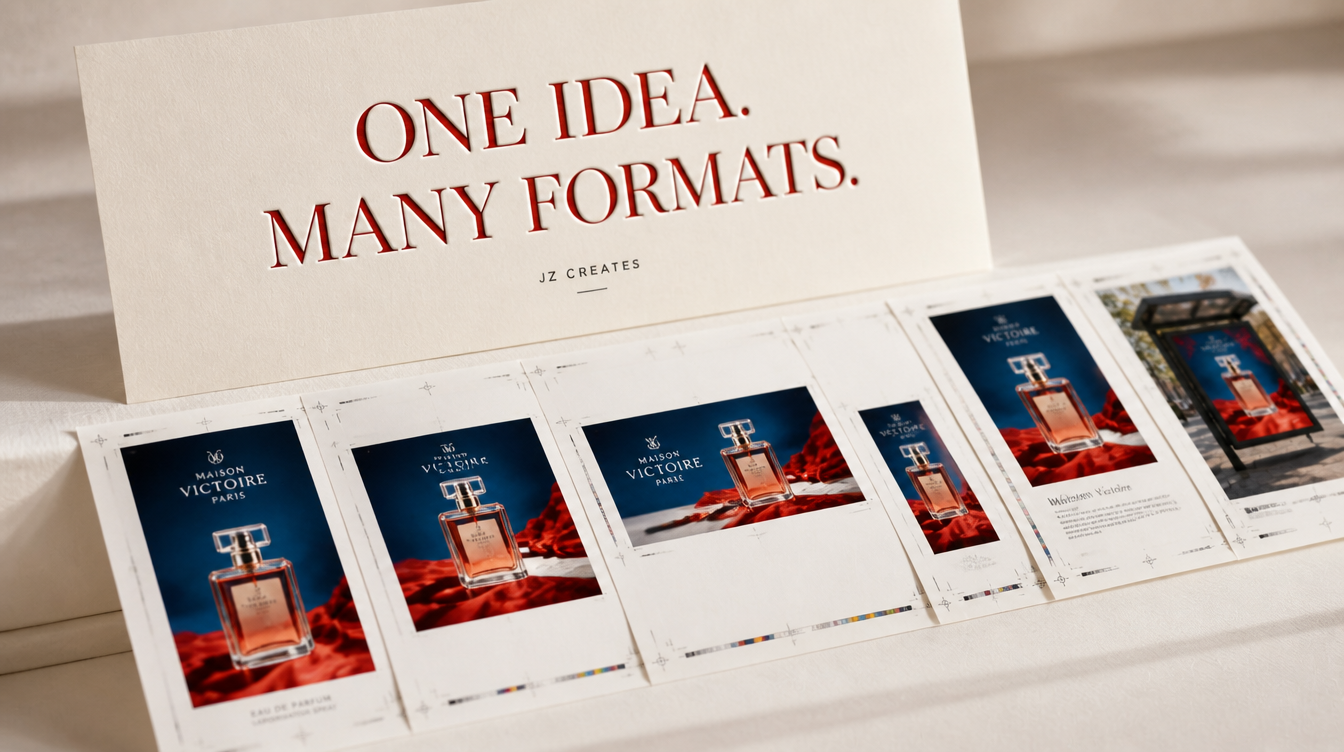
Here’s where generative AI advertising quietly pays for itself. One approved master concept can become a 6 second bumper, a 15 second cutdown, a vertical story, a square feed post, and a localized version for three markets. Editing in CapCut handles the resizes, captions, and cutdowns without rebuilding the spot from scratch.
We showed nine formats built this way in our AI marketing videos gallery, and the pattern is always the same: one idea, many doors into it.
Where People Stay in the Driver’s Seat
The cleanest way we’ve found to explain the split to a leadership team is stage by stage. AI gets a clear job at each step, and so do people.
| Campaign stage | Generative AI’s role | The human role |
|---|---|---|
| Strategy and insight | Summarizes research, surfaces patterns | Decides what the brand stands for |
| The big idea | Offers raw material and wild cards | Picks the one idea worth a season |
| Concept exploration | Generates territories and key frames fast | Judges fit, tone, and ownability |
| Previs and pitch | Builds motion tests and animatics | Sells the vision to stakeholders |
| Asset production | Produces imagery, motion, and voice | Directs, casts, and refines |
| Versioning and localization | Resizes, cuts down, adapts language | Protects meaning across markets |
| Final approval | Flags inconsistencies against the guide | Signs off on brand and legal |
Notice the pattern. AI shows up in every row, and people own every decision. That’s the balance that keeps a campaign feeling authored instead of assembled.
Generative AI Advertising for Brand Campaigns: The Guardrails That Protect the Brand
Speed without guardrails is how brands drift. The upside of this whole shift depends on a few habits that keep every asset recognizably yours.
Why generative AI advertising needs a brand bible the models can follow
Your brand guidelines were written for designers. Models need something more literal: reference images for every mood, exact palette values, lighting descriptions, product angles that are always allowed, and a short list of things the brand never does.
We keep this in a shared Google Workspace folder so every writer, editor, and producer pulls from the same source of truth. It sounds basic. It’s the single biggest reason one campaign looks consistent across two hundred assets.
Plan disclosure and provenance from the start
Audiences are paying attention to how AI shows up in advertising. When a major beverage brand released an AI holiday spot, it sparked a huge public conversation, which we unpacked in our piece on the Coca-Cola AI holiday ad reaction.
The takeaway for brands is simple: decide your disclosure approach before launch. Standards like Content Credentials, built on the open C2PA specification, attach provenance information to media so viewers and platforms can see how an asset was made. Treat it as a trust signal, not a warning label.
Keep likeness, rights, and claims clean
Use real people’s likeness only with clear consent and a contract that covers AI use. Keep product claims accurate, especially in categories like beauty and food, where a generated image can accidentally promise a result the product doesn’t deliver. Your legal team should see AI assets at the same stage they see traditional ones.
How to Run Your First Generative AI Campaign Pilot
If your team hasn’t put generative tools into a live brand campaign yet, start small and structured. Here’s the pilot shape we recommend:
- Pick one campaign with a clear, existing idea. Don’t ask AI to find the idea and prove the workflow at the same time.
- Research the demand first. Keyword and search data from DataForSEO shows how people actually describe the problem your product solves, which sharpens the headline language before a single frame is generated.
- Build the brand bible for models. Reference images, palette, lighting, and the never list, all in one place.
- Run a concept and previs sprint. Three territories, key frames for each, one motion test for the winner.
- Version the winner and measure. Ship the master plus cutdowns, and compare performance against your last traditionally produced campaign.
Here’s a version of the brief prompt we use to open a concepting sprint. Adapt the bracketed parts to your brand:
Territory brief: “You are a senior creative director. Our brand is [brand], known for [one line positioning]. The campaign goal is [goal] for [audience]. Write five distinct campaign territories, each with a one line idea, the core emotional tension, a hero visual described in cinematic detail, and one reason it could fail. Keep every territory true to this brand voice: [three voice words].”
That last request, one reason each territory could fail, is the most useful line in the whole prompt. It forces the thinking a creative director would do anyway.
What We Actually Use at JZ Creates
We run JZ Creates, a creative agency in Los Angeles focused on content, AI, and automation for brands across consumer products, luxury, music festivals, authors, entertainment, and events. Before that, our team spent 20+ years at LA creative agencies producing campaigns for major Hollywood studios, which is exactly why we’re so protective of the big idea.
Here’s the stack behind the campaign work described above: Claude for strategy synthesis, territories, and scripts. Kling for motion tests and hero footage. CapCut for cutdowns, captions, and resizes. Google Workspace as the home for the brand bible and approvals. DataForSEO for the search demand research that shapes the messaging. If you want a look at how these pieces connect in production, our AI video production workflow walks through it, and our AI creative services page covers how we partner with brand teams.
For teams that also want the distribution side handled, our AI automation services connect finished assets to the channels where they run.
The Bottom Line
If you’re weighing how generative AI advertising fits into your next brand campaign, from the first concepting sprint to a full library of versioned assets, that’s exactly the kind of work our team does every week. At JZ Creates, we specialize in producing captivating and engaging content for social and digital media. If your project needs highly creative content, contact us so we can bring your vision to life!
Frequently Asked Questions
What is generative AI advertising?
Generative AI advertising is the use of AI models to create or accelerate ad assets such as copy, imagery, motion, voice, and versions. In practice it spans everything from concept key frames and previs films to final cutdowns and localized variations, guided by a human creative team.
Will generative AI replace creative agencies?
It changes what agencies spend their time on rather than removing the need for them. Execution gets faster and more abundant, which makes strategy, taste, and the ownable campaign idea more valuable. Agencies that build AI into their production line can deliver more, faster, at a high standard.
Is generative AI advertising safe for premium and luxury brands?
Yes, when it runs inside clear guardrails: a model-ready brand bible, human art direction on every asset, and final approval from brand and legal. Restrained, cinematic directions suit premium categories especially well.
Do brands need to disclose AI generated ads?
Rules vary by platform and market, so check the policies where you run media. Many brands now plan disclosure up front and use provenance standards like Content Credentials so viewers can see how an asset was made, which tends to build trust.
Where should a brand start with generative AI in campaigns?
Start with one campaign that already has a strong idea. Use AI for concepting sprints, previsualization, and versioning, then compare results against your last traditionally produced campaign before scaling up.

About Jay Hernandez
Jay Hernandez is an award-winning Creative Director with 20+ years of driving standout campaigns for top brands. Based in Los Angeles, he blends deep creative expertise with cutting-edge AI tools to help businesses and marketing teams unlock bold, breakthrough ideas that deliver real impact. If you are ready to elevate your brand and turn big visions into unforgettable campaigns, connect with Jay and make it happen.
Share This Article
Sponsored