AI Content Creation Workflow: Our 7 Stages for Brands
Sponsored
Sponsored
Key Takeaways
- An AI content creation workflow is the full path from brief to published asset, with AI doing the heavy lifting at each stage and people owning the decisions that shape the brand.
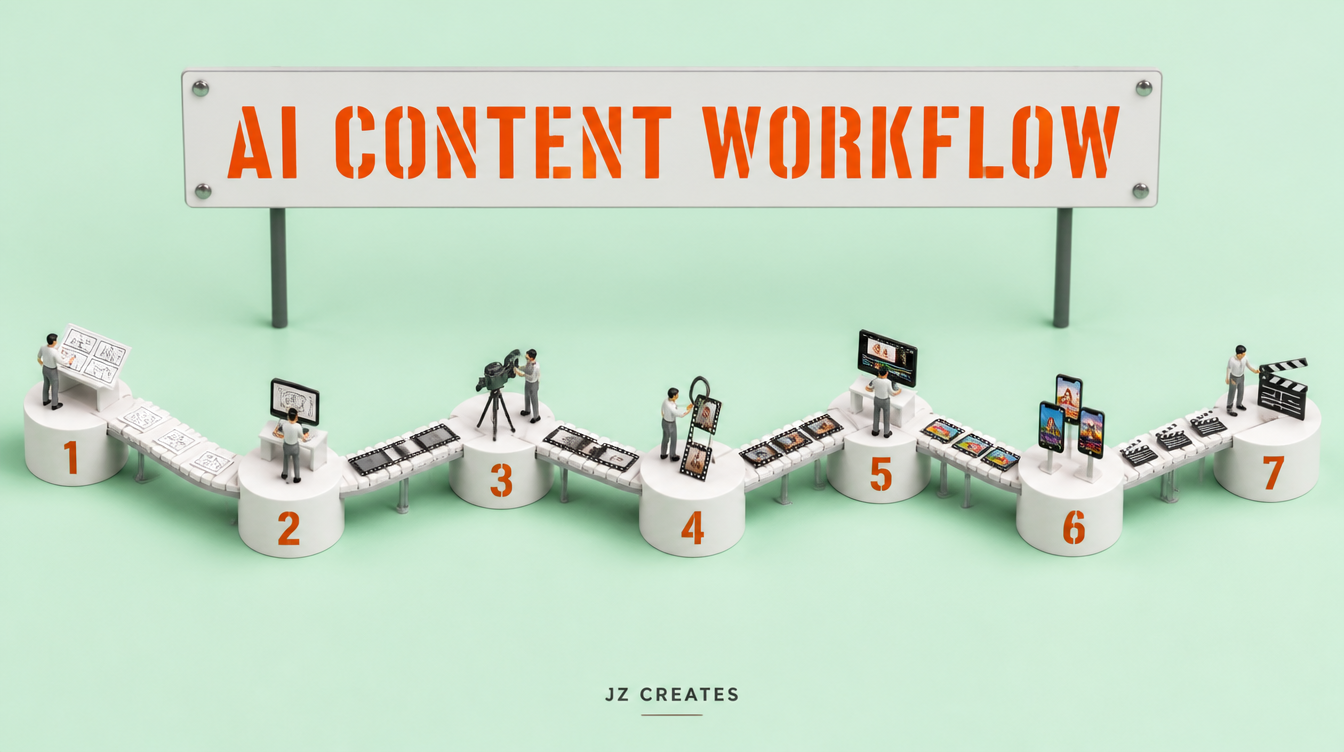
- Our content creation workflow runs in seven stages: brief, research, concepts, scripts, production, edit and versioning, then review and distribution.
- The biggest gain isn’t faster drafts. It’s that stages which used to wait on each other can now run in parallel.
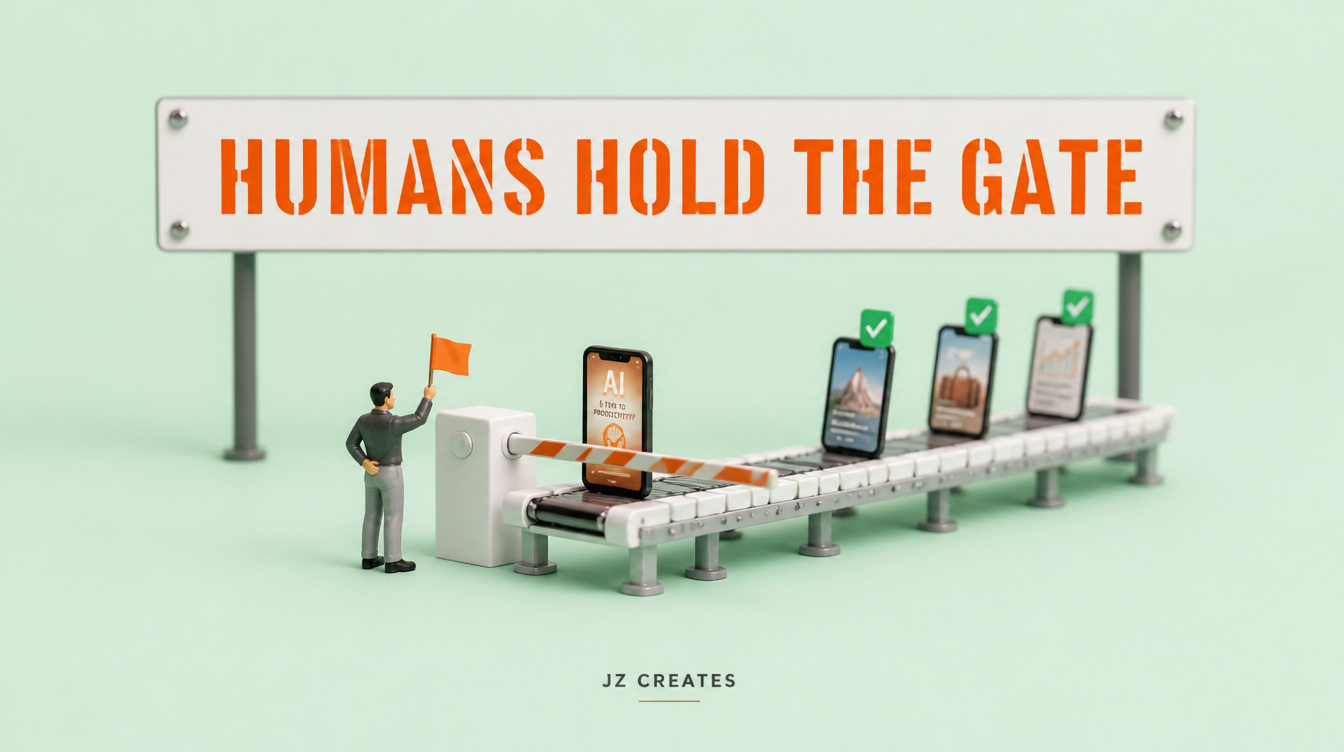
- Three human checkpoints never move: the creative idea, brand voice, and final approval before anything goes live.
- Process beats tools: BCG puts most of AI’s value in workflow redesign and people.
Here’s something that surprised us: the slowest part of making content was never the making. It was the waiting. Waiting on research, waiting on a concept round, waiting for a shoot date, waiting on edits and approvals. A good AI content creation workflow shrinks those waits more than it shrinks the work itself, and that changes how a brand plans a whole quarter.
Here’s the exact workflow we run for client brands, stage by stage, including where a human always keeps the pen.
What Is an AI Content Creation Workflow?
An AI content creation workflow is a repeatable sequence of stages (briefing, research, ideation, scripting, production, editing, review, and distribution) where AI tools handle drafting, generation, and formatting, while people set the strategy, choose the ideas, and approve the output. It’s a production system, not a single tool.
That distinction matters. A list of tools is a shopping cart. A workflow is the order you use them in, who signs off at each step, and what gets handed to the next stage.
We wrote about the automation side, the system that runs our own publishing, in our breakdown of AI content automation. This piece is the creative side: how a brand idea becomes finished, on-brand content that’s ready for every channel.
The Workflow at a Glance
| Stage | What AI handles | What our team owns | Main tool |
|---|---|---|---|
| 1. Brief | Gap check, clarifying questions | Goals, audience, budget | Claude |
| 2. Research | Search data, trend scan, summaries | What matters for this brand | SE Ranking |
| 3. Concepts | Wide idea generation | Picking the one idea | Claude |
| 4. Scripts | First drafts, shot lists | Voice, rhythm, final copy | Claude |
| 5. Production | Images, video, voice | Art direction, selects | Kling |
| 6. Edit + versions | Captions, resizes, cutdowns | Story, pacing, polish | CapCut |
| 7. Review + publish | Scheduling, formatting | Final approval | Blotato |
Swipe sideways to see the full table →
Every row has both columns filled. That’s the whole philosophy: AI never owns a stage alone. Our AI creative services page shows the projects it powers.
Stage 1: The Brief Gets Pressure Tested
Briefs are rarely complete. Before anyone writes a line of copy, we run the brief through Claude and ask it to find what’s missing: unclear audience, conflicting goals, deliverables that don’t match the budget.
It’s a five minute step that saves a week of rework: a short list of questions goes back to the client on day one, not day ten. The strategy itself stays human (our AI content strategy guide goes deep on that).
Stage 2: Research That Lands Before the Kickoff Call
Research used to quietly eat two weeks. Now it runs in an afternoon. We pull search demand and the questions people actually ask from SE Ranking, scan what competitors and category leaders are posting, and have Claude summarize it all into a one page research brief.
The judgment call is ours: which insight actually matters for this brand. A luxury watch client and a music festival can read the same trend data and need opposite takeaways.
Stage 3: Concepts in Volume, Then Ruthless Selection
This is where AI earns its keep for creative teams. Instead of three concepts from a single brainstorm, we generate thirty territories in minutes, then our team cuts them down to the two or three worth presenting.
Here’s a prompt pattern we use at this stage:
Concept territories: “Using the research brief below, give me 20 distinct creative territories for [brand]’s [campaign]. For each: a one line idea, the emotional hook, and one example social post. Avoid anything a competitor is already doing in the research. Rank them by how surprising they’d feel to [audience].”
The machine widens the funnel. People close it. Picking the idea is the most valuable decision in the process, and the one we’d never hand off.
Stage 4: Scripts and Shot Lists
Once a concept is approved, Claude drafts scripts, captions, and a shot list for every deliverable in the plan. Then a writer on our team rewrites for voice and rhythm. The first draft gets us 70% of the way there; the last 30% is what makes it sound like the brand instead of like everyone else.
We feed in the brand’s top performing past content plus a short voice guide. That one habit does more for on-brand output than any prompt trick.
Stage 5: Production Without Waiting for a Shoot Day
This is where an AI content creation workflow feels the most different from the old way. Instead of locking a shoot date and building everything around it, we generate visual frames and motion in Kling straight from the shot list, art directed by a human who knows what premium looks like.
For a consumer product launch, that might mean hero product scenes in five settings before lunch. Real footage still plays a big role when the story needs it (we cover the blend in our guide to AI video production), but production no longer holds everything else hostage.
Stage 6: Edit Once, Version Everything
The edit is still craft. We cut in CapCut, then use its auto captions and resizing to turn one master edit into vertical, square, and widescreen versions, plus short cutdowns for paid.
Versioning used to be the most tedious part of any campaign. Now it’s the fastest, which frees time for testing more openings (the same idea behind our piece on AI UGC ads).
Stage 7: Review Gates and Distribution
Nothing goes live without a human signing off. Before distribution, every asset passes three checkpoints: Does the idea still hold? Does it sound like the brand? Is every claim accurate? Google’s own guidance on AI-generated content makes the same point from the search side: quality and helpfulness matter, however the content was made.
Once approved, assets get scheduled in Blotato, so the campaign rolls out to Instagram, TikTok, LinkedIn, and YouTube from one place (more in our guide to AI social media automation).
Why This Content Creation Workflow Runs in Parallel Now
In the old content creation workflow, stages were serial: research before concepts, concepts before scripts, scripts before the shoot. Every delay pushed everything behind it.
With AI in the loop, stages overlap. Visual exploration starts while scripts are still being polished. Versioning templates get built while the master edit is underway.
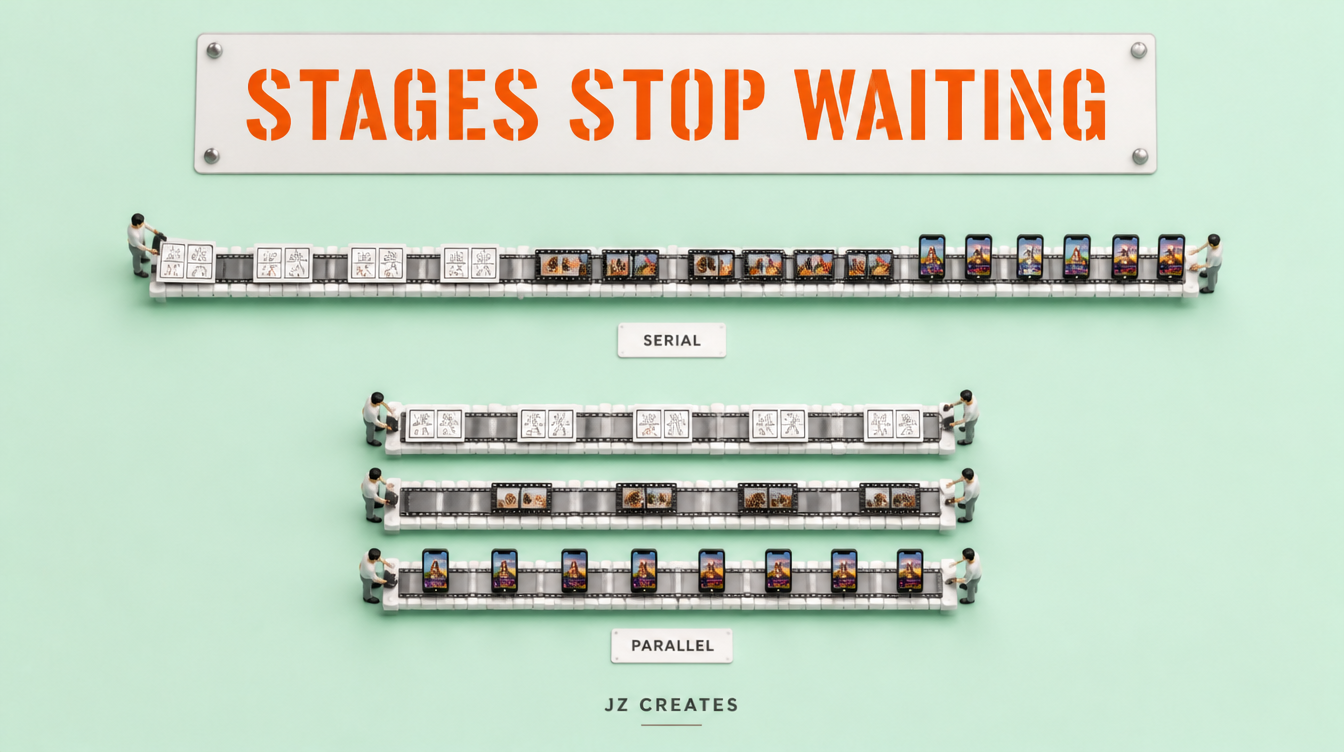
“AI doesn’t just make each stage faster. It lets the stages stop waiting on each other.”
That’s also why the process matters more than the tool. BCG describes only about 10% of AI’s value coming from the algorithm itself, 20% from data and technology, and the remaining 70% from redesigning workflows and how people work together. Swapping in a new tool changes very little. Redesigning the handoffs changes everything, and it’s the heart of our AI automation services.
Adapting an AI Content Creation Workflow to Your Brand
The seven stages stay the same across clients. What changes is where we slow down.
Luxury Brands Slow Down at Art Direction
Luxury lives on restraint. We generate fewer concepts and spend more time in Stage 5 refining light, texture, and negative space.
Festivals and Events Speed Up Versioning
A music festival needs volume and speed: lineup drops, set time graphics, recap reels the morning after. Stage 6 turns one edit into dozens of placements.
Authors Lean on Research and Scripts
For a book author, Stages 2 and 4 matter most: finding the questions readers ask and turning the book’s ideas into short scripts that build authority.
Where to Start With Your Own AI Content Creation Workflow
Don’t rebuild everything at once. Pick the stage where your team waits longest (usually research or versioning), add AI there, keep a human approval step, and measure the time saved. Then move to the next bottleneck.
What We Actually Use at JZ Creates
We run JZ Creates, a creative agency in Los Angeles focused on content, AI, and automation for brands across consumer products, luxury, music festivals, authors, entertainment, and events. Our 20+ years at LA creative agencies producing campaigns for major Hollywood studios is why the idea and the final edit stay human. We’re also building AI Growth Z, an agency focused on automation, which shapes how we design the handoffs.
The core stack behind this workflow: Claude for briefs, research synthesis, concepts, and scripts. SE Ranking for search demand and audience questions. Kling for AI image and video production. CapCut for editing, captions, and multi-format versions. Blotato for scheduling and multi-platform distribution.
The Bottom Line
If you want an AI content creation workflow built around your brand, from the first brief to scheduled posts on every channel, that’s exactly what our team does for clients every week. At JZ Creates, we specialize in producing captivating and engaging content for social and digital media. If your project needs highly creative content, contact us so we can bring your vision to life!
Frequently Asked Questions
What is an AI content creation workflow?
An AI content creation workflow is a repeatable process where AI handles research, drafting, generation, editing support, and formatting, while people set the strategy, pick the ideas, and approve everything before it publishes. A typical version runs from brief to research, concepts, scripts, production, editing, review, and distribution.
How do you automate content creation with AI?
Start with the repetitive stages: research summaries, first drafts, captions, resizing, and scheduling. Connect them so each stage hands off to the next, and keep human approval at the creative idea, brand voice, and final publish. Automate one bottleneck at a time.
What is the 30% rule for AI?
There’s no official 30% rule. In business and content work, it usually means AI handles roughly 70% of the work (research, drafts, formatting) while people contribute the critical 30%: judgment, creative direction, brand voice, fact checking, and final approval. Treat it as a rule of thumb, not a standard.
What is the 10/20/70 rule for AI?
The 10/20/70 rule comes from BCG’s framing of AI transformation: about 10% of the value comes from algorithms, 20% from data and technology, and 70% from people, processes, and workflow redesign. For content teams, it means redesigning handoffs and approvals matters more than which AI tool you pick.
Will AI replace a creative team?
No. AI changes what a creative team spends its time on. Drafting, resizing, and research get faster, which frees people for the work that decides results: choosing the idea, directing the visuals, shaping the story, and protecting the brand.

About Jay Hernandez
Jay Hernandez is an award-winning Creative Director with 20+ years of driving standout campaigns for top brands. Based in Los Angeles, he blends deep creative expertise with cutting-edge AI tools to help businesses and marketing teams unlock bold, breakthrough ideas that deliver real impact. If you are ready to elevate your brand and turn big visions into unforgettable campaigns, connect with Jay and make it happen.
Share This Article
Sponsored